
Foreword
I want to express my gratitude to NorthLink ferries for their kind sponsorship towards my return ferry crossing from Aberdeen to Lerwick. Those seeking a trip to either Orkney or Shetland should consider their comfortable and enjoyable services.
Journey North
I recall my first trip to Dingwall, watching Ross County host St Johnstone. One hundred miles up the A9, over the Kessock Bridge, and then some towards the Premierships’ most northern team. It felt rural and isolated. I smile to myself, passing the 60th parallel, over 200 miles further north than Dingwall, with the Shetland Islands in sight. My aim in these remote islands? Sample football in Britain’s most northernly football leagues.
Seven teams compete in the Ocean Kinetics Premier League, and a further twelve in the DITT reserve league, a few of them ‘B’ teams. The league’s summer schedule means football runs from late April to early September, finishing before the harsh Atlantic winter and darker days set in. Friday and Saturday night games allow a weekend of football, across the Isles.
Without my car and with a fear of a non-existent public transport system, I planned my trip around matches within Lerwick, where I would stay. It transpired that I would watch Lerwick Spurs, both their ‘A’ and ‘B’ teams across the weekend. I’ll admit I knew very little of Lerwick Spurs, nor football anywhere across the island. After finding an email address online, I contacted the club, explaining my plans to catch some action on the isles. They swiftly replied, matching my enthusiasm for my journey north. I was warned that the first game I intended to watch had been moved from Gilbertson Park (where I was staying adjacent) to the island of Whalsay, an hour away over land and sea. Damn. Checking my bus options, I knew that if I had any chance at watching football on this tiny island, I may have to rely on the kindness of strangers. After more conversation, I secured a lift with team manager Davy MacDonald. Optimistic I would now make the game, I boarded the NorthLink ferry service, leaving Aberdeen on a sunny afternoon.
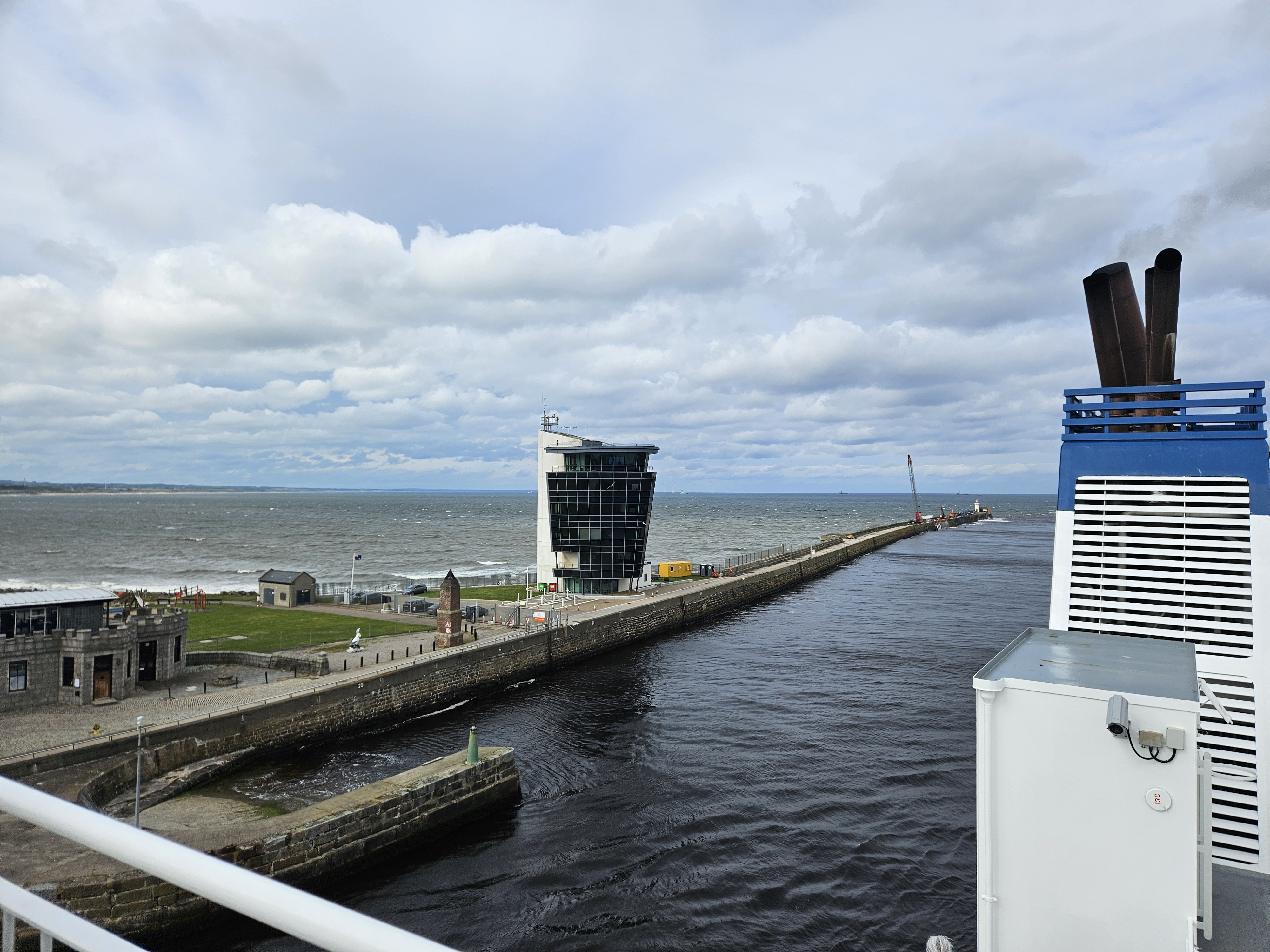
Onboard NorthLink’s M.V. Hrossey, I enjoyed a relaxing evening between the restaurant, bar, and lounge. Before retiring for the night, I went out to the rear deck for some fresh air and a view of Kirkwall, where I bumped into Keith Leslie, assistant manager and kitman of Lerwick Spurs. Keith played for Spurs between 1980-1991 and 1997-2004, stepping into the assistant role in 2019. A generational Shetlander, Keith was exactly the person to learn about the Isles and the football within them. After chatting we retired for the night, agreeing to meet in the morning, where he would take me to my accommodation. The next morning, I joined Keith as the M.V. Hrossey cruised up the Bressay Sound, with Lerwick in view. He dropped me in town, where I had the day to explore before I would join the team in travelling to Whalsay.
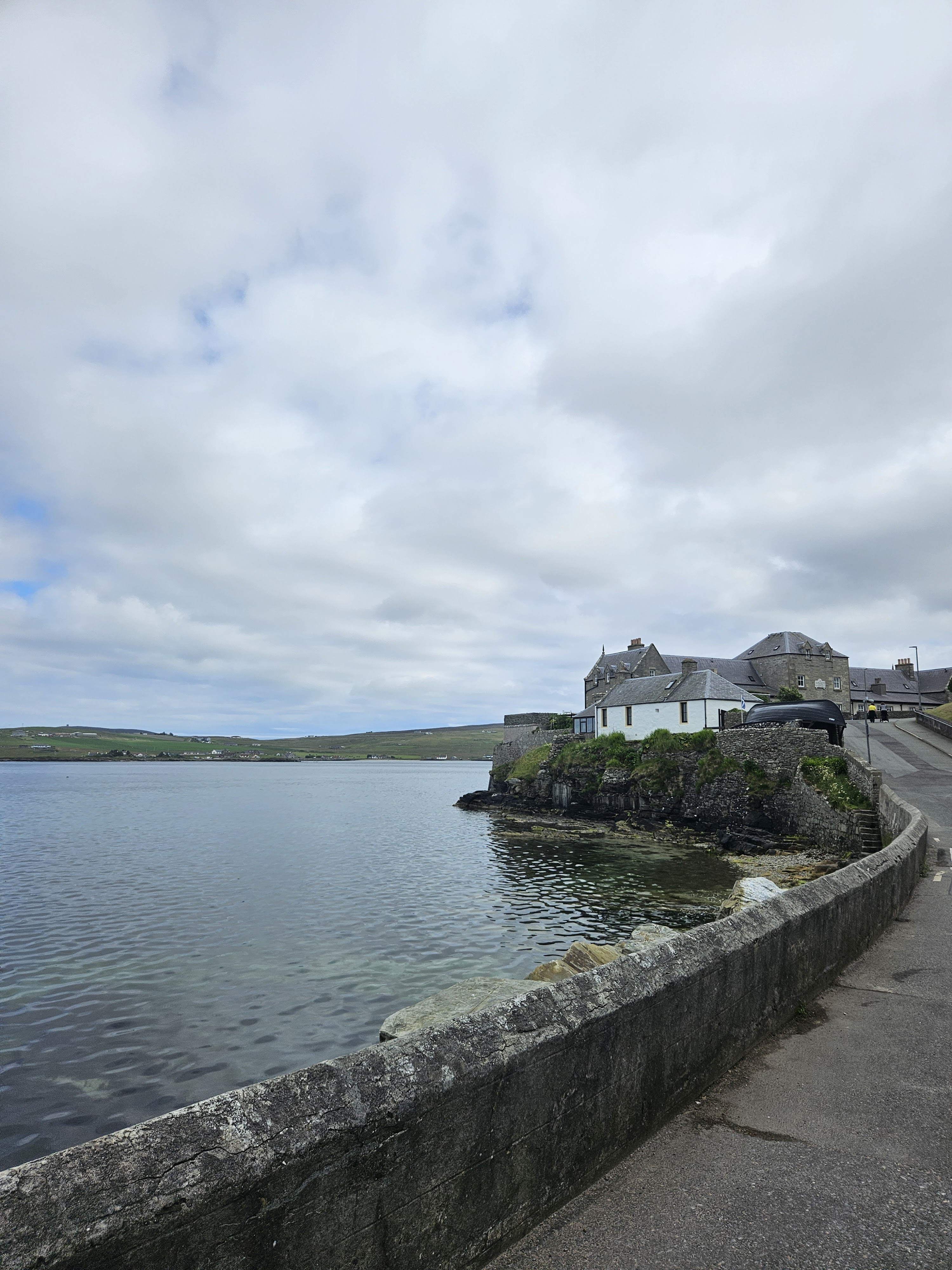
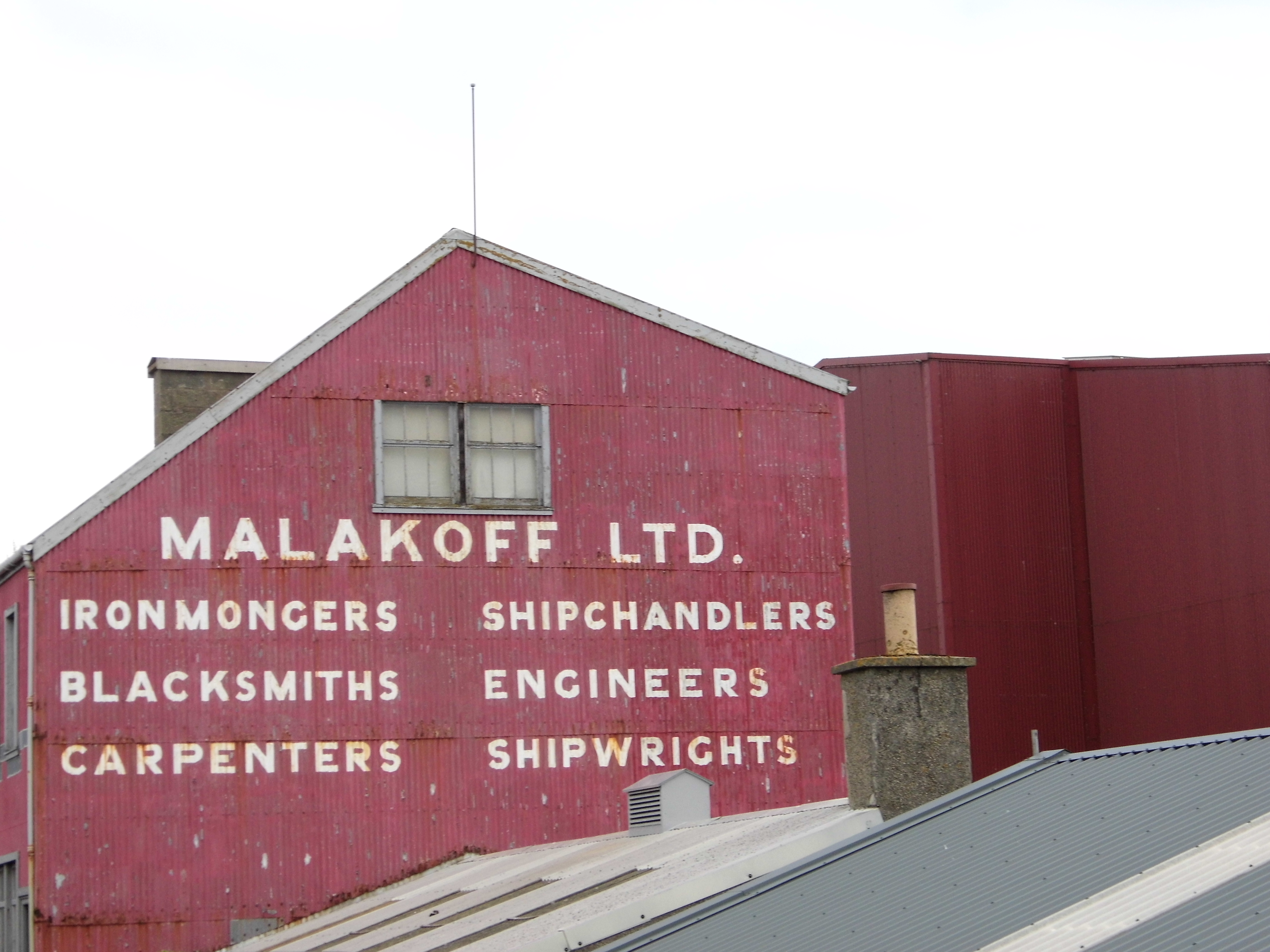
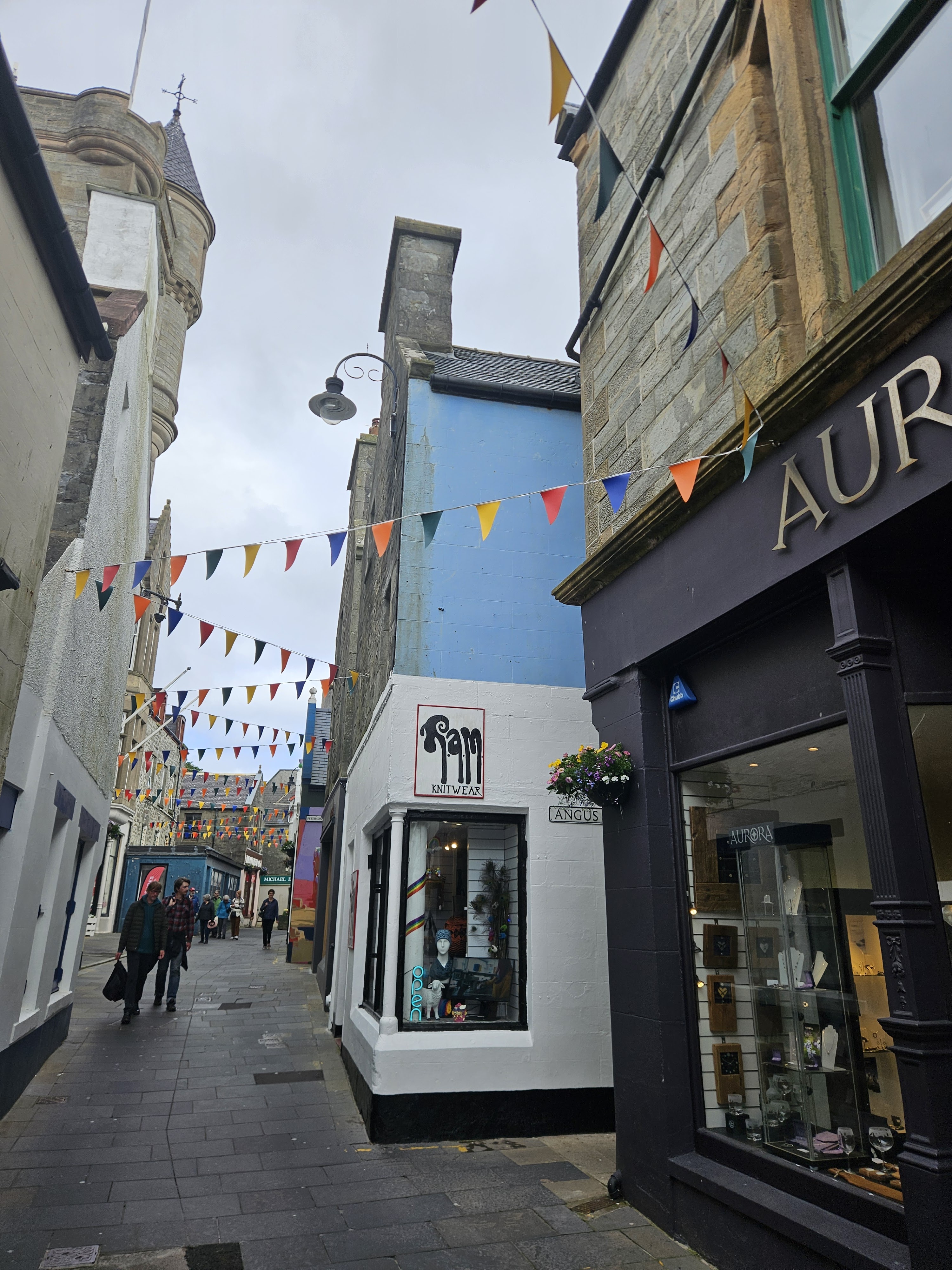
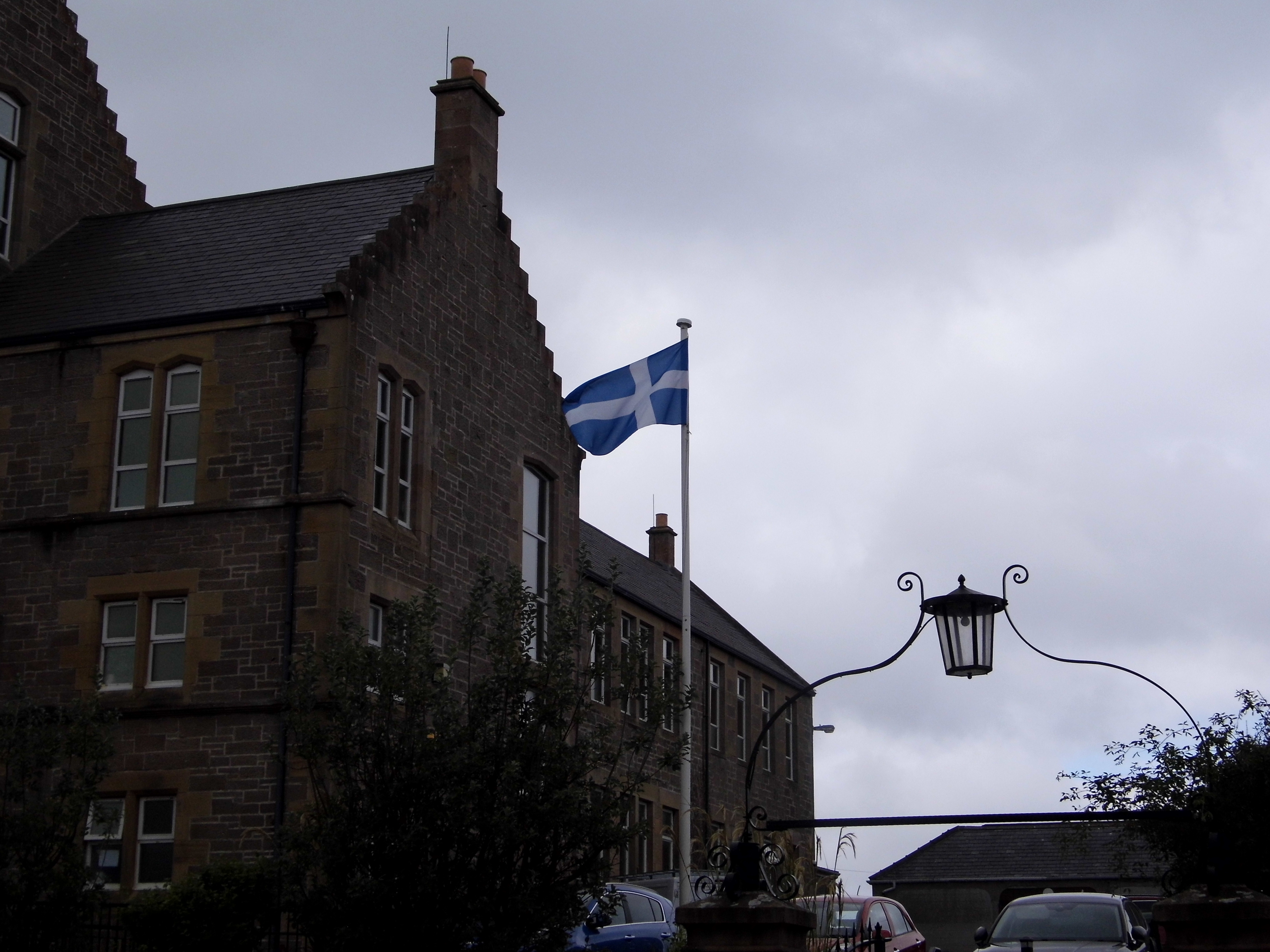
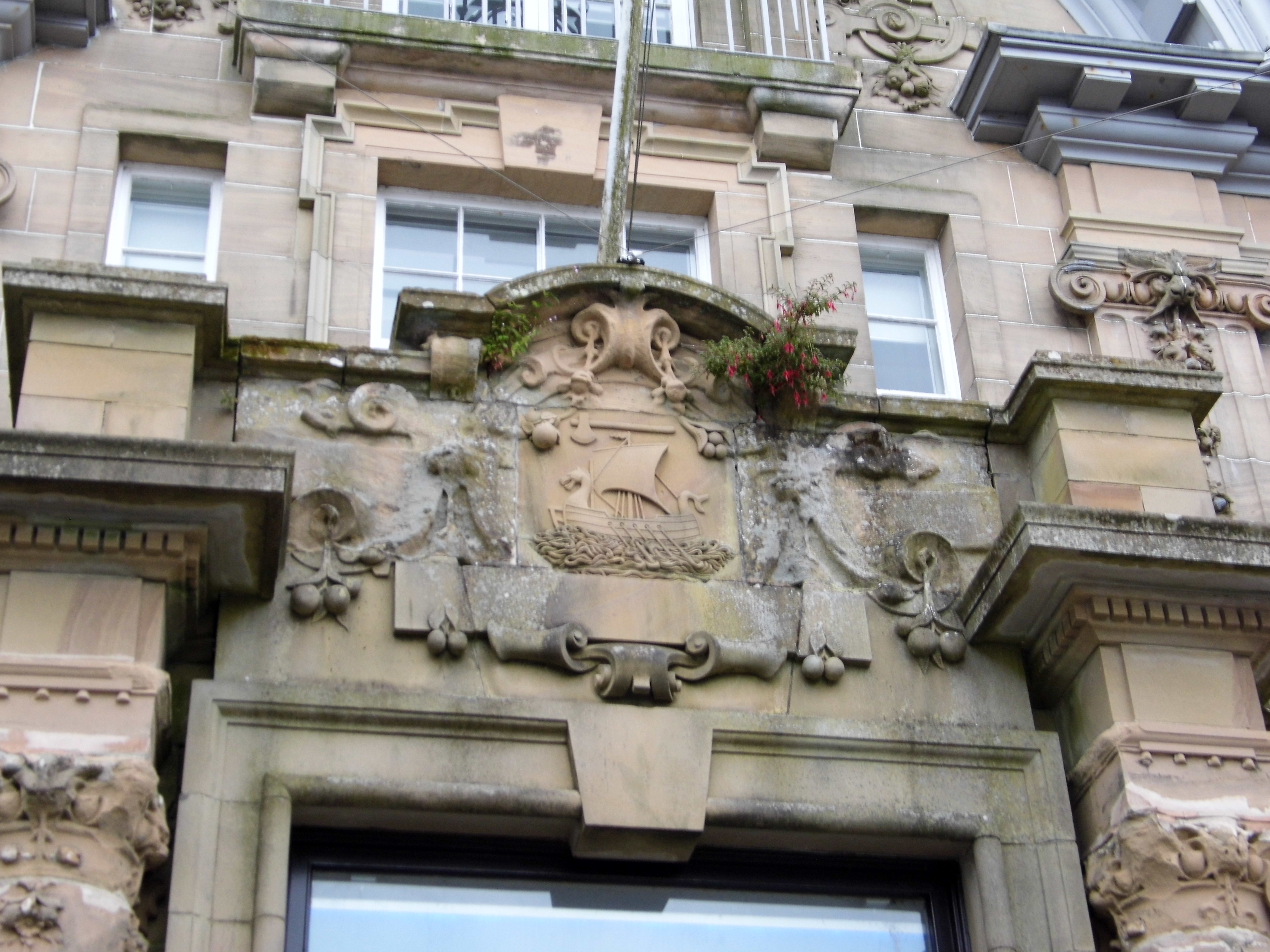
The Sights of Lerwick.
The Bonnie Isle
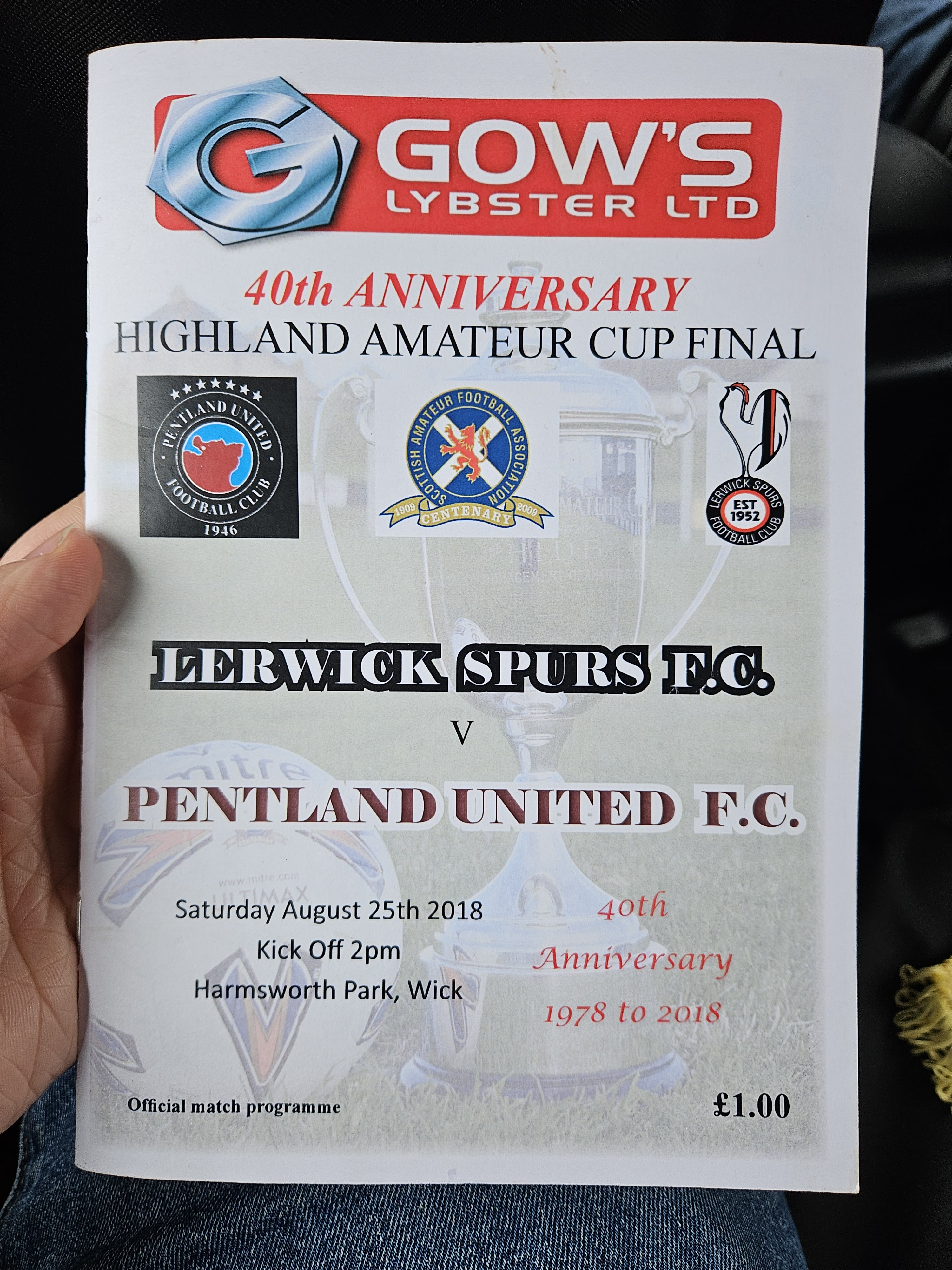
Davy picked me up in the afternoon, and we drove through the Lang Kames towards the ferry terminal of Laxo. Davy has been involved with Spurs for over 40 years, joining the youth system in 1983. Taking over the managerial reigns in 2009, he has become one of the most successful managers in Shetland football, winning every possible cup and the league seven times since 2012. Beyond island honours, Davy led the team to the final of the Highland Amateur Cup in 2018, becoming the first Shetland team to do so. Despite completing a 10-hour, 180-mile trip compared to Pentland United’s 18-mile jaunt, they were able to take the mainland side to extra-time, losing 2-1 in the end.
The Hendra was waiting for us at the Laxo terminal, where we joined up with the rest of the team. A short crossing delivered us to the village of Symbister, the largest settlement in Whalsay. Despite a population of just one thousand, Whalsay is a major fishing hub within the North Sea, resulting in a concentration of wealth within the island. It was once said that Whalsay had the highest concentration of millionaires anywhere in Britain. I followed the team up the aptly named Rocky Road, past the Whalsay Leisure Centre, and towards Harbison Park, the venue for the night’s most northerly fixture in the British Isles.
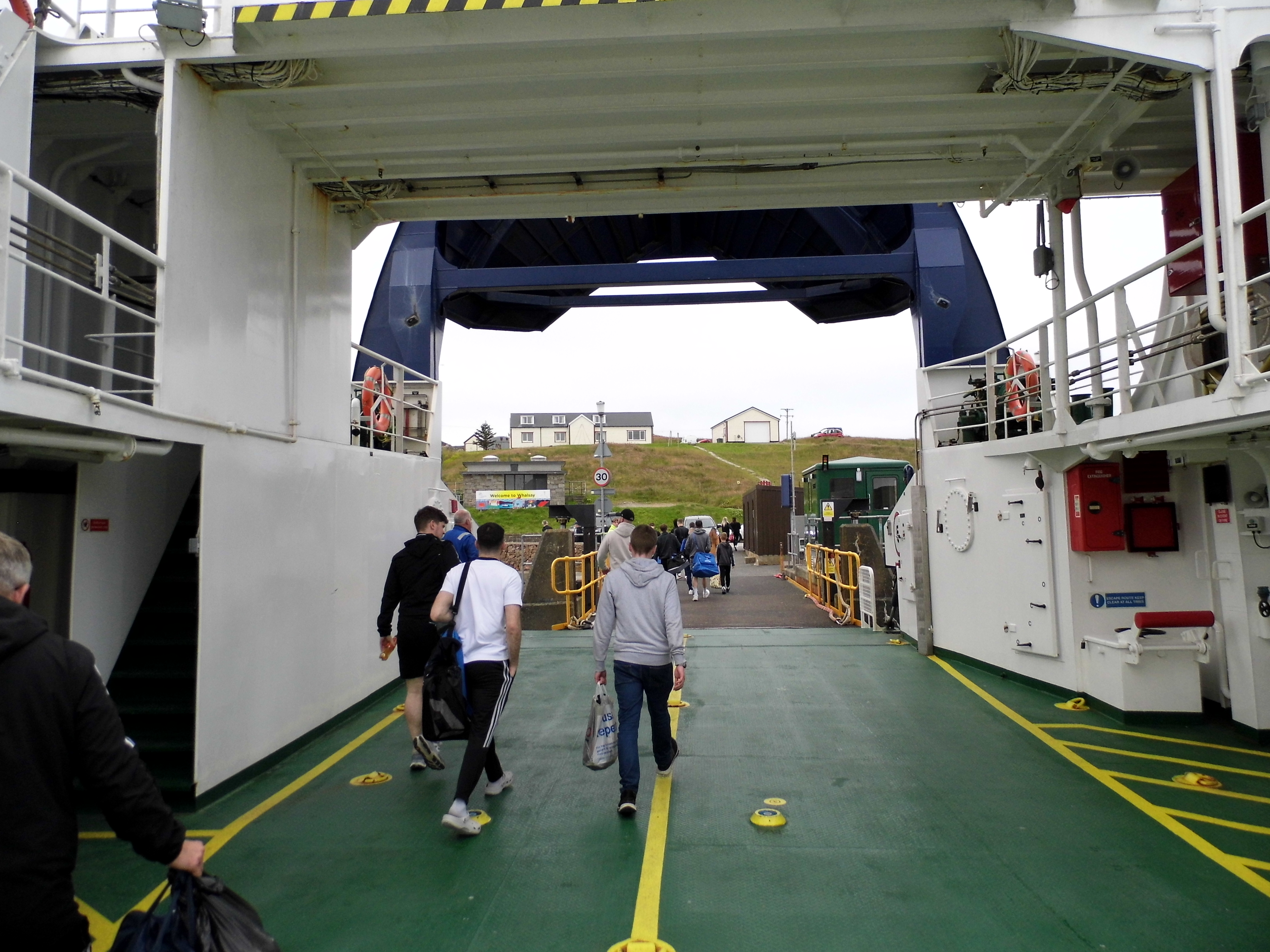
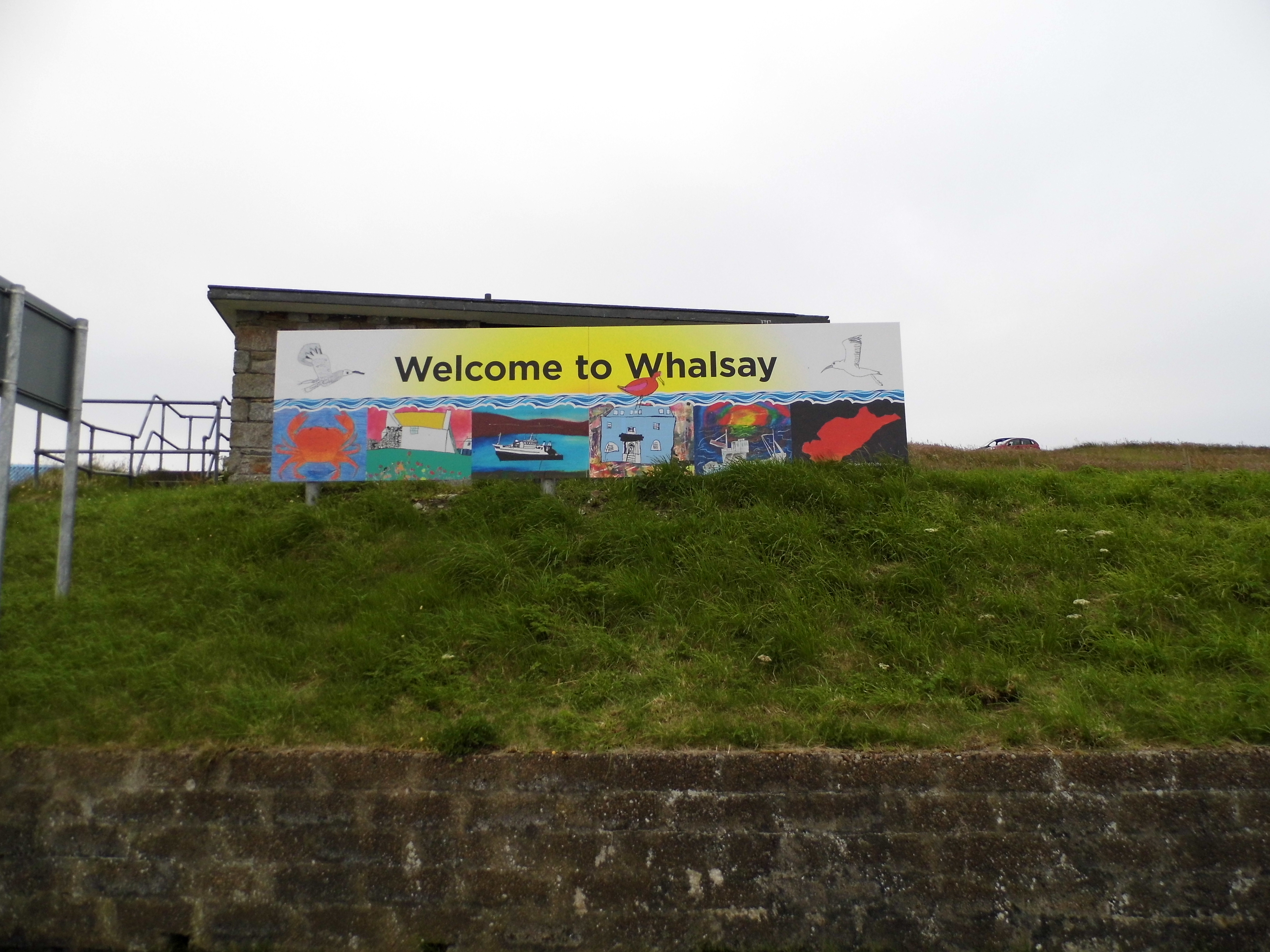
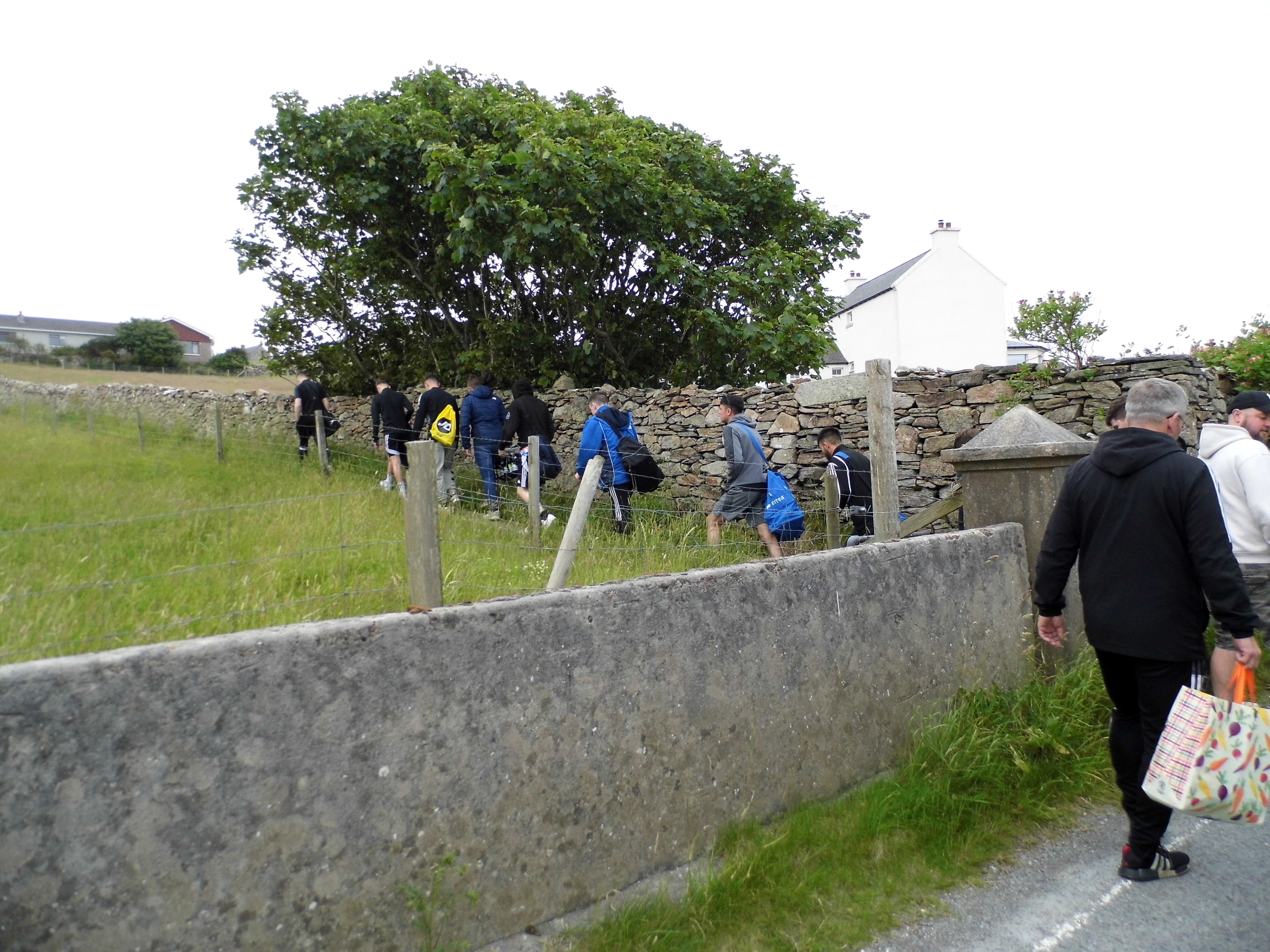
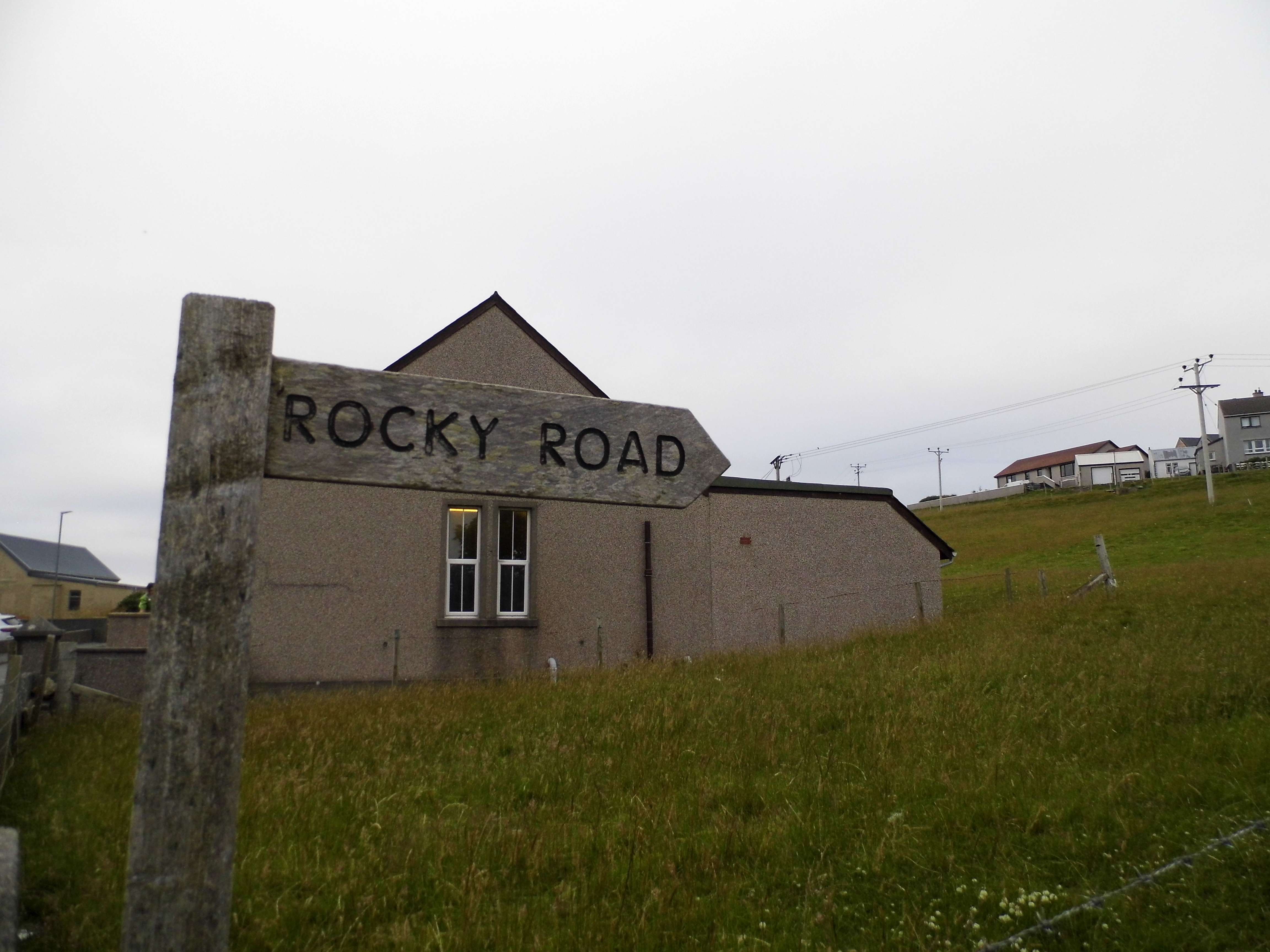
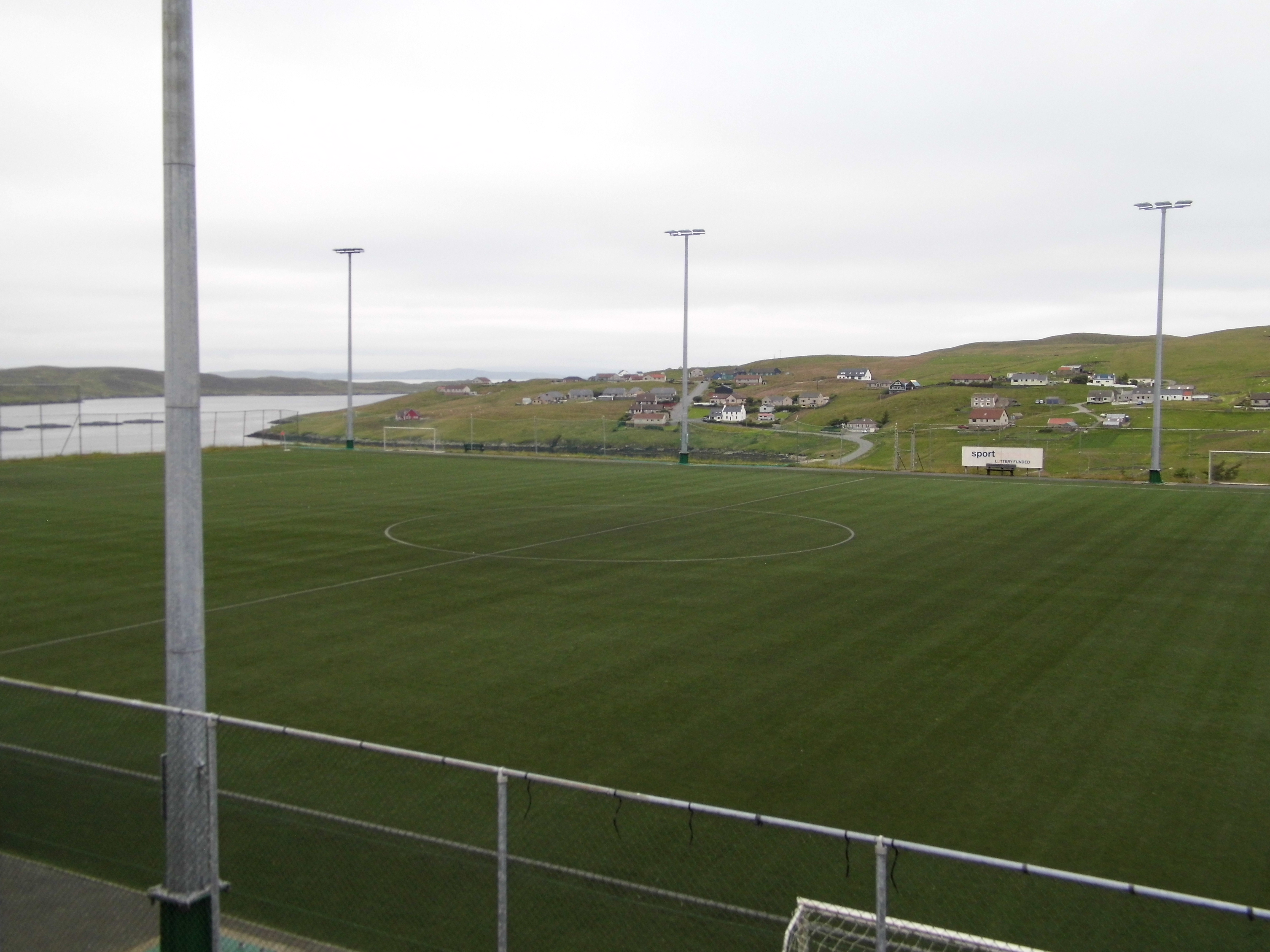
Not your typical walk to an away day.
MATCH REPORT: Whalsay F.C. Vs Lerwick Spurs F.C.
Spurs kicked off in calm conditions, playing in white shirts and black shorts and socks. Whalsay, in red and blue, had the first sight of goal in a frantic opening, when David Murray was played through between the Spurs’ defence, but he dragged a panicked shot behind the left post. Whalsay’s Scott Johnson also managed a couple of attempts on goal but was unable to give the home side an early lead. As the game settled, Spurs ventured forward with Connor Grant on the left, cutting in on his weak foot but striking wide. In their most dominant period of the first half, Spurs are through again, when captain Lewis Harkness takes the ball through the middle of the Whalsay backline, stopped only by a strong save from Whalsay keeper Kyle Duncan. On the stroke of half-time, Spurs keeper Paul Grant tipped over an awkward shot to keep the score level, with that being the last action of the half.

Mindful of the outgoing ferry time, referee Robert Goudie restarted the game after just a few minutes. Moments later Whalsay veteran Bryan Irvine fails to take a brilliant chance when the ball falls to him ten yards from the goal, blazing his shot over the bar. Whalsay were knocking on the door now, and the opener would come from an Ethan Rathore header in the 50th minute. A chorus of car horns sounded from the spectators’ vehicles. Spurs struggled to react to the goal and almost lost a second straight after, with Magnus Thompson shooting high and wide. Whalsay’s Irvine was fouled on the halfway line, and with the referee’s advantage, they were able to catch the Spurs’ defence out, leaving Rathore to bag his brace and Whalsay’s second at the hour mark.
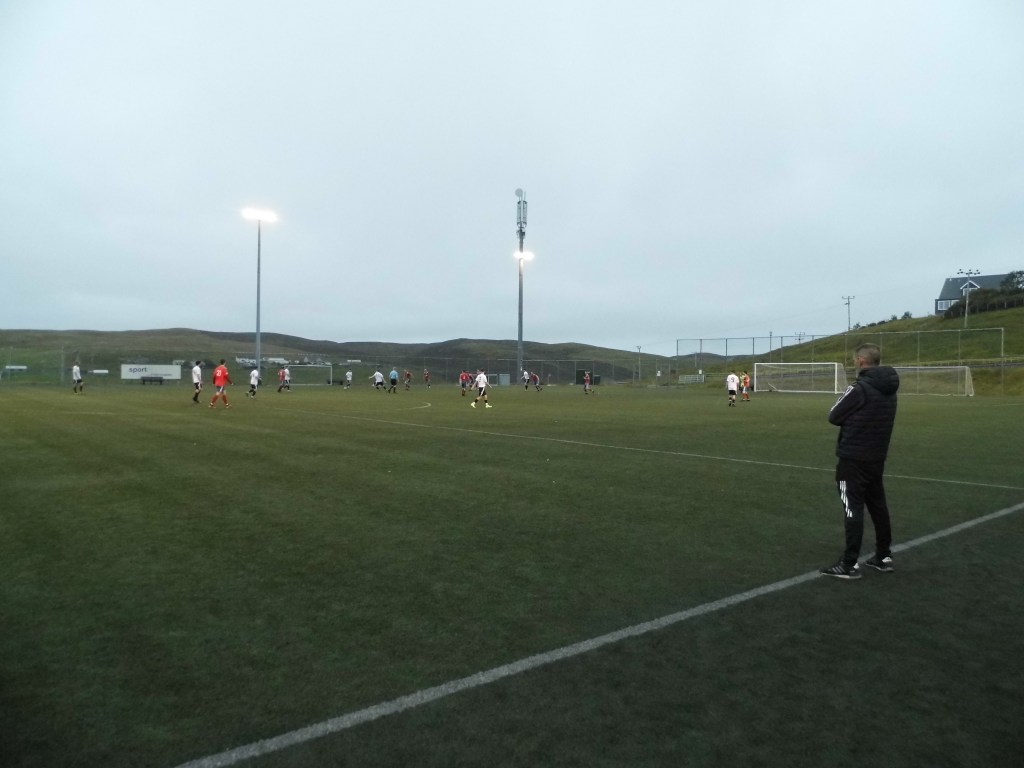
A deflated Spurs plod on, replacing Josh Carroll with Brandon Braer with the hope that an attacking substitute could get them back in the game. A big penalty call goes against Spurs in the 74th minute when Whalsay keeper Duncan clattered into Paul Molloy. The referee waves away the possibility of a penalty, despite the keeper missing the ball. More substitutions for both teams were made, as it looked like it would not be Spurs’ night. A stoppage-time corner almost gave Spurs a consolation, but the steadfast keeper made another good save to keep his clean sheet. The referee sounded the final whistle and after quick formalities, Spurs made a hasty retreat to the ferry terminal.
FULL TIME- Whalsay 2-0 Spurs
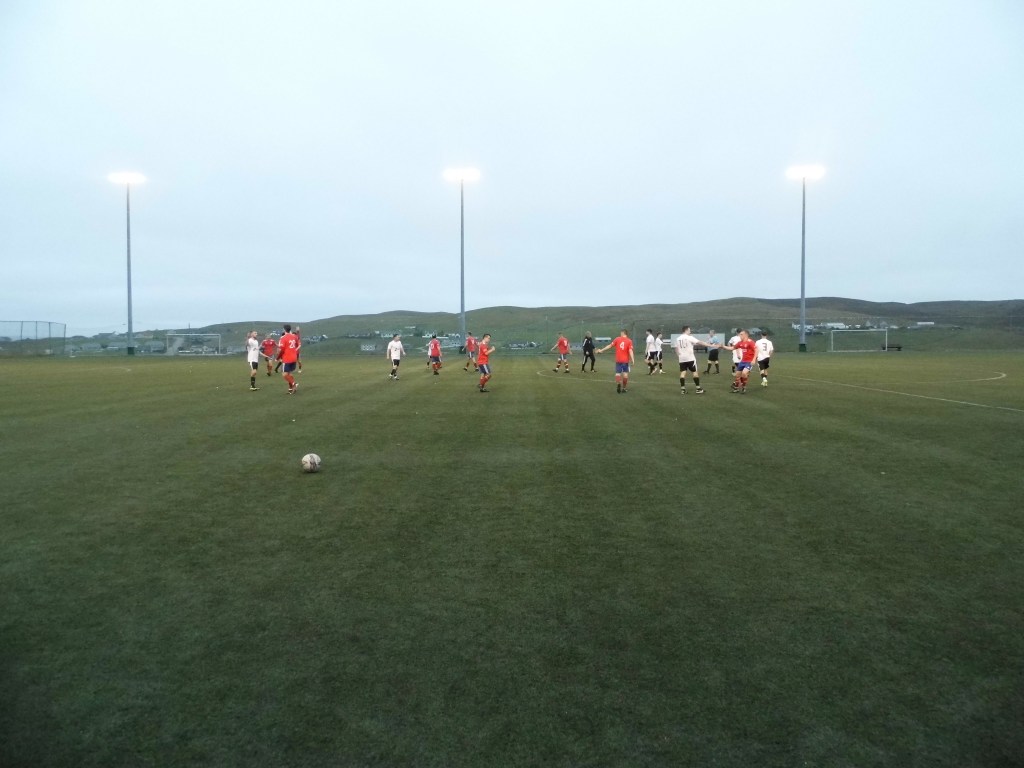
Spurs Past and Present
That evening Davy loaned me some books and programmes on the history of Lerwick Spurs and football on the Isles, many compiled with the help of the late James P Peterson, the chairman of Lerwick Spurs on and off between the 1970s and the 2010s. Amazed with both the quantity and quality of information, I read on.
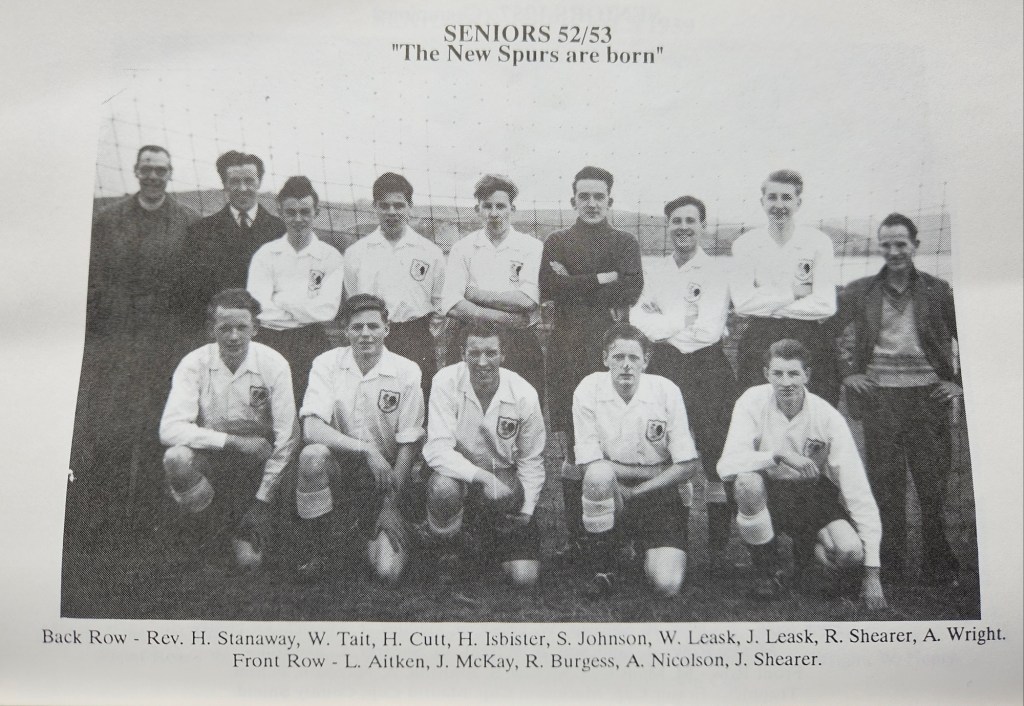
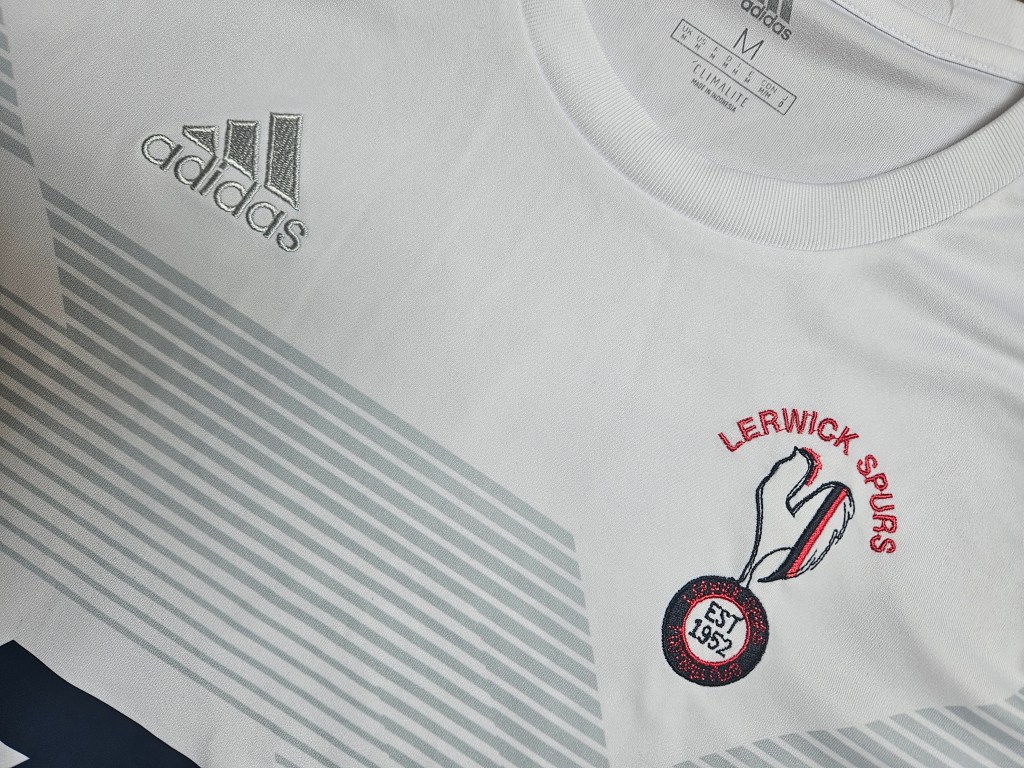
Lerwick Spurs was founded in a hair salon in February 1952. Whilst there are older clubs, no team has played as many successive campaigns as the Spurs. Despite concern there would not be enough players for the formation of another Lerwick club, founder Leslie Eunson was determined to materialise his dream. Spurs played their first match on the 1st of May 1952, in white shirts and black shorts, a combination since which they have maintained. Within their first eight seasons as a club, Spurs amassed thirteen trophies, continuing to pick up silverware regularly till the 2000s. A decade without a senior trophy passed, when Davy MacDonald picked up reigns in 2009, winning the Madrid Cup in 2010. Spurs, always eager to develop their club and community, sought overseas friendships with other clubs. The most successful of which was the 1977 Måløy partnership, which saw the clubs host bi-annual friendlies until 2010. When the Shetland FA declined a request from Faroese club Tvøroyrar Bóltfelag, Spurs stepped in, forming the friendship in the late 1950s. The catalyst to Spurs’ successes over the years as Keith told me, was the forward-thinking nature of the committee. Since 1969, there has been a junior set-up within the team, which now has representation from under-eights to the seniors. The nickname Milkbags came from the 1970s when a friend of the chairman ran one of the few dairy farms on the island and printed the Spurs’ logo on plastic bags of milk they would deliver across Shetland.
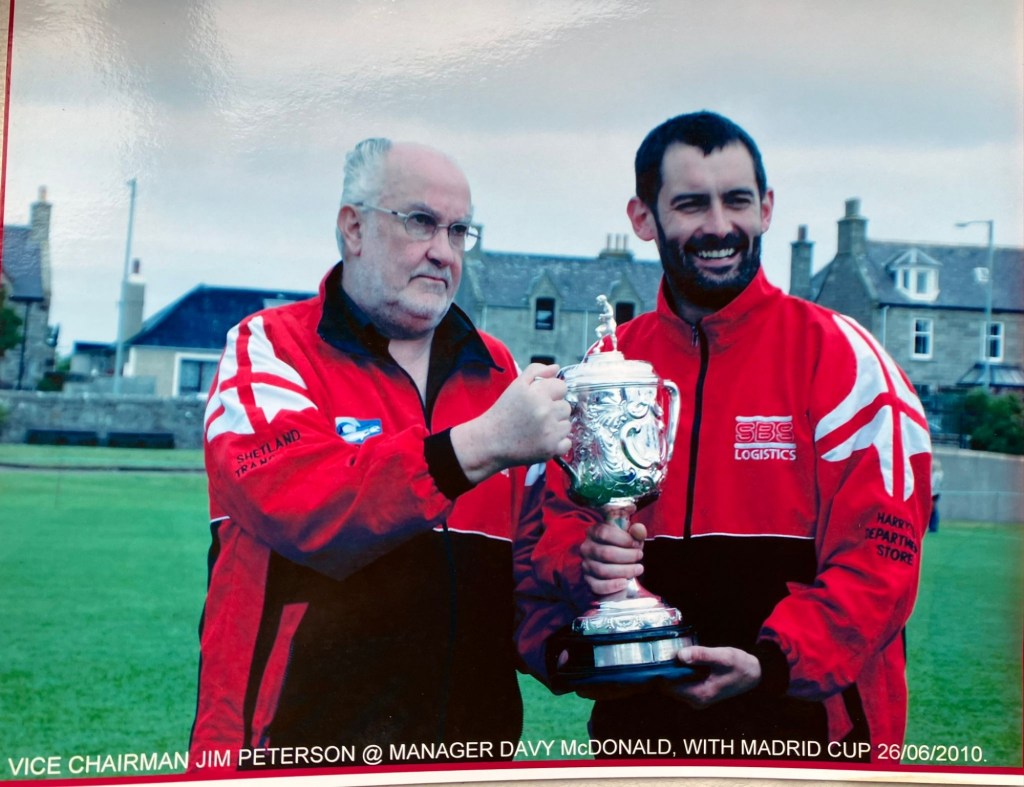
Beyond Spurs, Shetland has had an obsession for football since the 19th century. Shetland News first reported on a match in Lerwick on the 9th of July 1887. In 1908 Bailie Alexander Milne, the chairman of Aberdeen FC, awarded the Milne Cup to footballers in Lerwick. At the time, organisers decided there were enough cup competitions on the Isles and decided to organise a game between a Lerwick select and a Kirkwall team, who travelled from Orkney to compete for the prize. After WWI, the cup was rebranded to be played between Shetland and Orkney, displaying the best players each archipelago had to offer. Shetland has frequently had the better of Orkney over recent years, but the contest remains fierce yet respectful, committing to a yearly tradition now held for over 115 years.
The finest day in Shetland football came in the summer of 2005. The Isles were hosting the Island Games, a bi-annual ‘mini-Olympics’ for small islands usually within larger countries. Shetland topped their group, which consisted of the Isle of Man, Saare County, Åland and the Falkland Islands, setting up a final against Guernsey. Gilbertson Park was packed with an estimated 5000 spectators on the 15th of July to watch Shetland beat the favourites 2-0, with goals from captain John Montgomery and Duncan Bray.
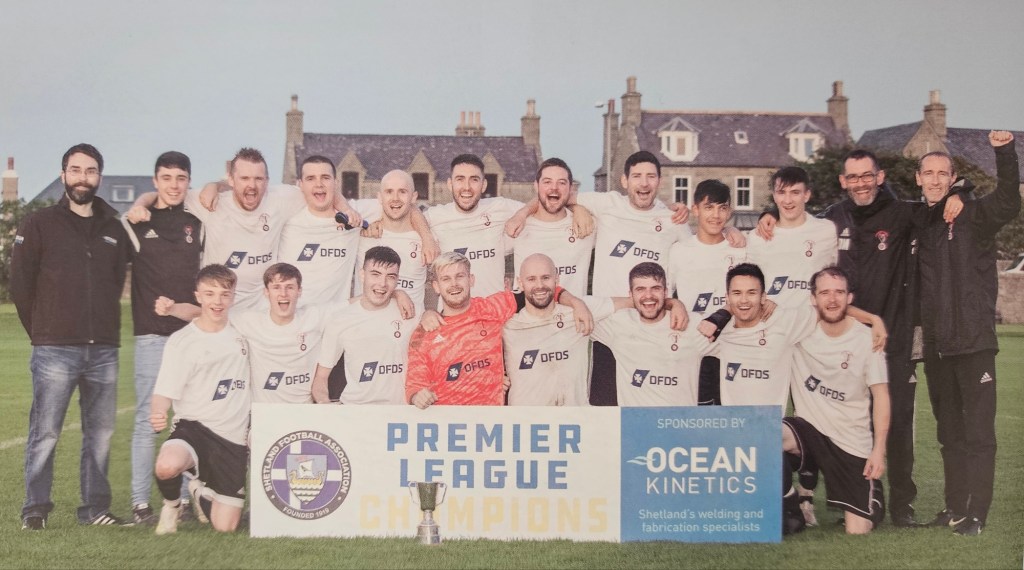
Due to the significant investment from the booming energy focused economy in Shetland, numerous leisure facilities were constructed in the past few years, which has made a significantly positive impact on individual and team sport across the Isles. Health and well-being is clearly prioritised in Shetland, and it was clear to see.
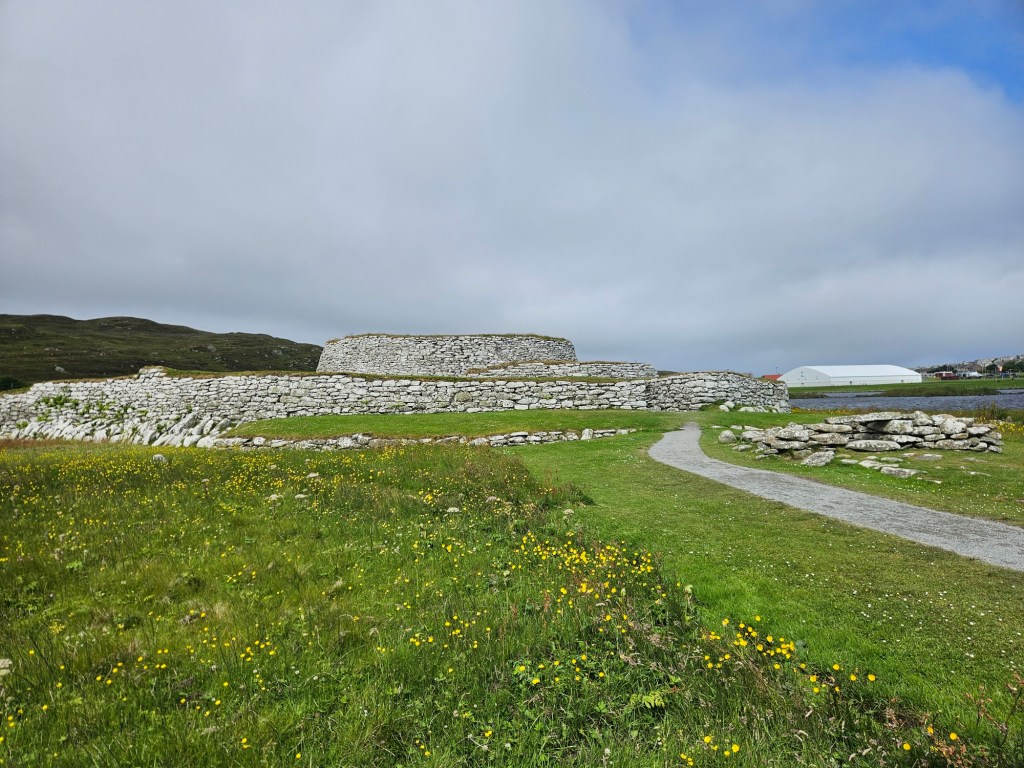
I was fascinated by the history of football on the Shetland Isles, and how meticulously it had been recorded. I found that the local sports shop in Lerwick stocked the most recent book, and they were kind enough to give me a copy free of charge. Knowing the next match was at local ground Seafield Park with a 3 pm kick-off, I wandered the streets of Lerwick once again and visited the historical Clickimin Broch, presumed to be over 3000 years old. I was at the ground in time for a quick catch-up and a few photos of the pitch.
MATCH REPORT: Lerwick Celtic B Vs Lerwick Spurs B
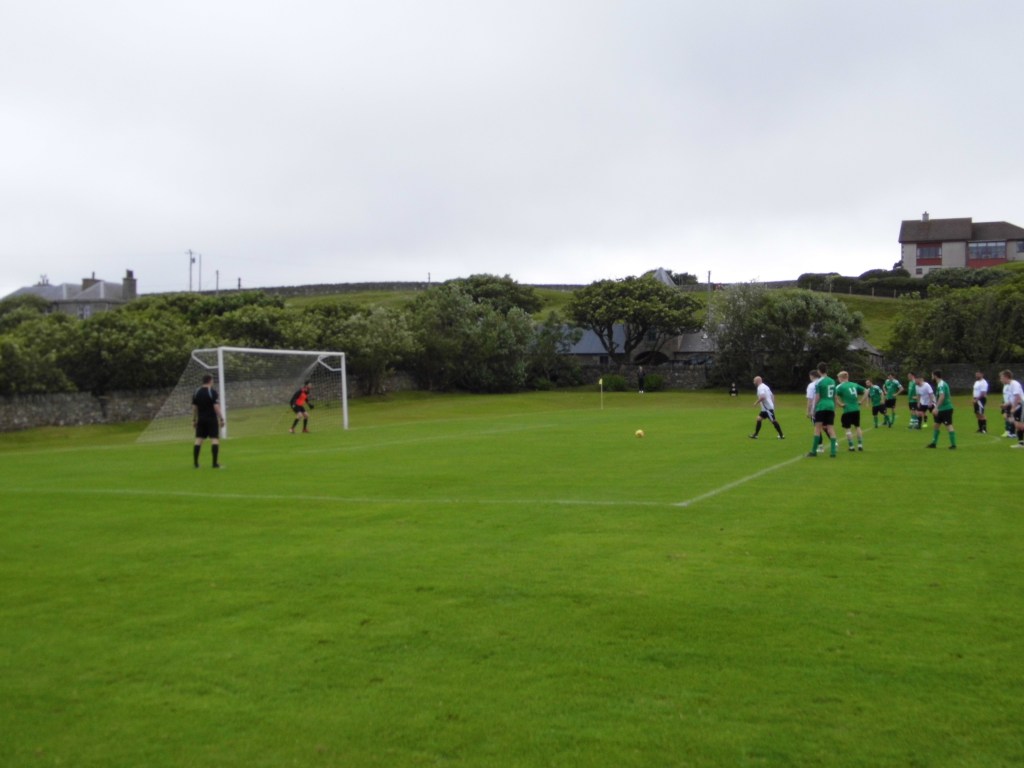
Spurs got the game underway with a northerly wind blowing a gale, creating tricky conditions for both teams. Spurs and Shetland football legend James Johnston showed his composure in the early stages, calming a hectic start. Celtic received the first corner of the game, with Spurs keeper Henry Oldbury producing a fine save to tip the ball over. The wind continued to blow through Seafield Park in the first half, contributing to wayward passes and lost balls. Celtic managed to strike the crossbar in the 20th minute when the wind once again diverted the ball closer to goal than Oldbury expected. Spurs manager Dominic Mann- the most decorated Shetlander, winning the Island Games at 16- urged his team onward towards the end of the half. Despite a penalty shout from Lerwick Celtic, Spurs held on and grew into the game well, creating the most chances by halftime. A depleted Celtic had 59-year-old Paul Reegan on the bench, who had trials at Motherwell in the early 80s.
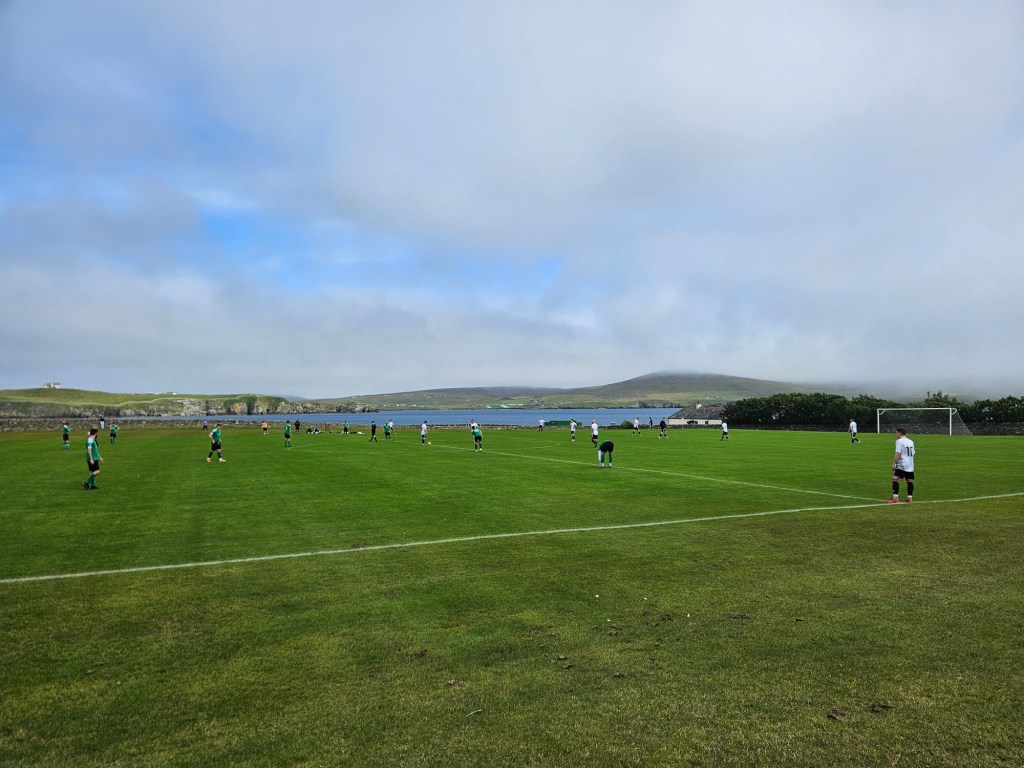
The so-far lenient referee whistled the start of the second half, where Spurs were once again causing trouble within the Celtic backline. In the 50th minute, Jay Manson wriggled his way into the Celtic box and was taken down by both the Celtic centre-back and keeper, leaving the referee no choice but to point to the penalty spot. Johnston stepped up and calmly dispatched the ball down the middle, giving Spurs a deserved lead. The game would have an unfortunate conclusion in the 55th minute when a tackle from a Spurs player resulted in a serious injury for the Celtic defender. The match was quickly abandoned, resulting in an awarded win to Spurs.
FULL TIME- Celtic B 0-3 Spurs B (Awarded Score)
The Viking’s Crossing
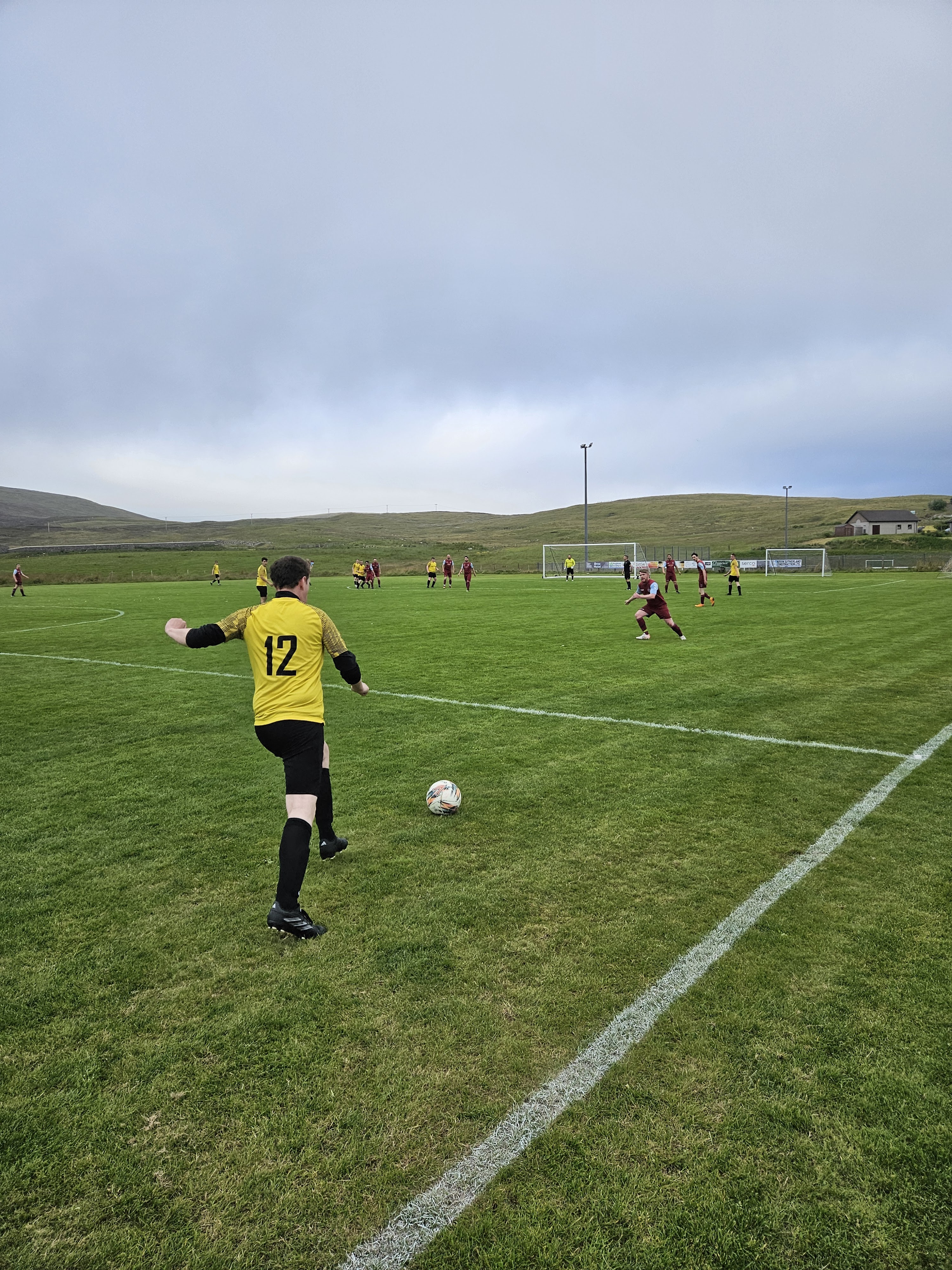
With the previous abandonment, there would be time to catch another game in the reserve league. I joined up with Keith and Davy again and we drove up through the Lang Kames and to the small town of Brae, in the North-West of the main island. Delting, a once omnipresent team at the top end of the premier division, dropped to the reserve league in 2023. Key players retiring and a lack of numbers meant Delting were no longer able to keep competing. They hosted Scalloway ‘B’ at Brae Park in equally windy conditions as the earlier game in Lerwick. Keith and Davy’s presence caused a humorous stir in town, as the Spurs pair are well known across the island. We enjoyed a competitive game, with five goals tipping in favour of the home side, who ran out 3-2 victors. I was explained the historical significance of the small village, where Vikings were thought to have dragged their longboats over the narrow isthmus between the Atlantic and North Seas, saving a lengthy trip around the peninsula of Northmavine.
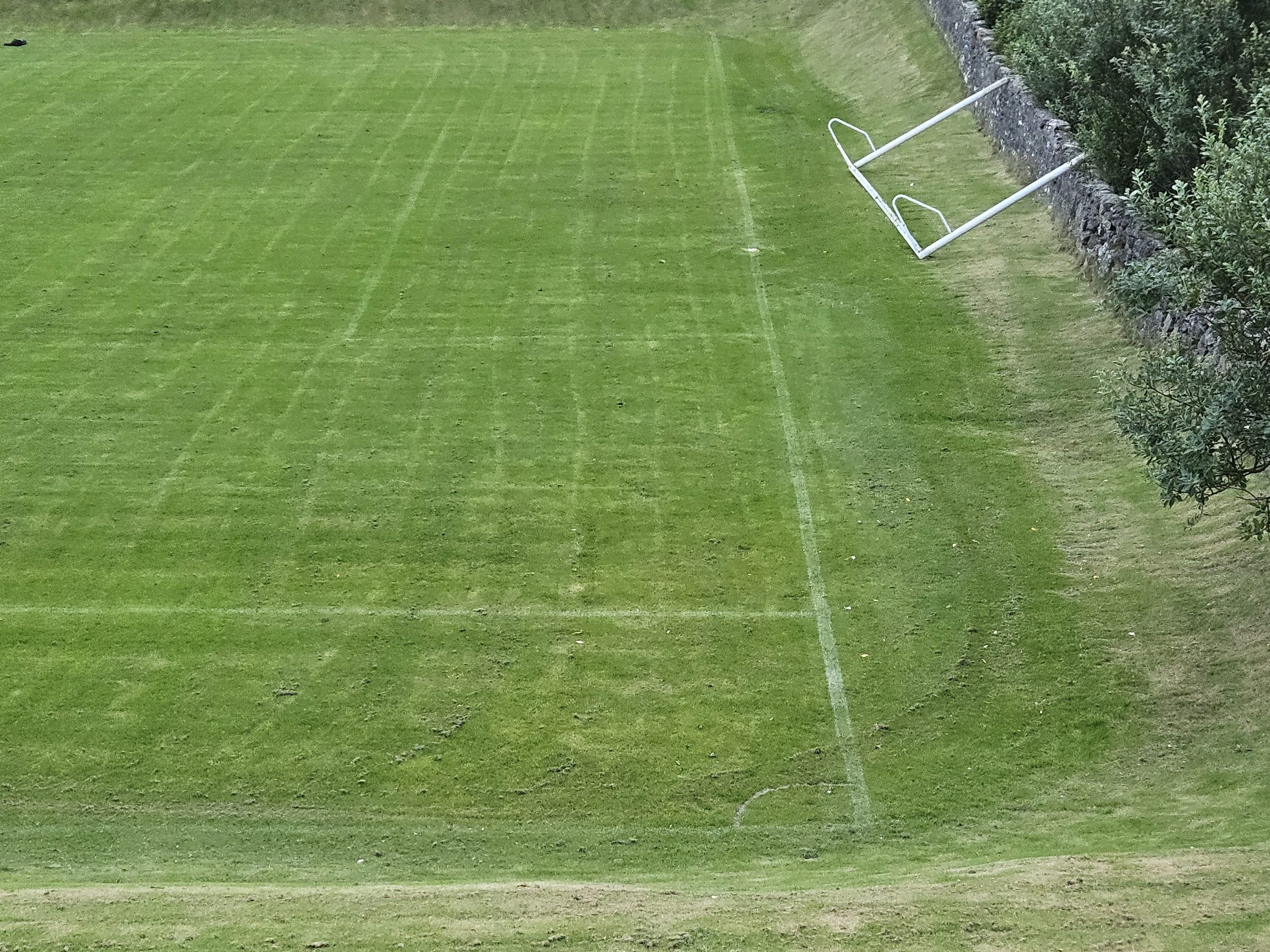
We took the scenic route back from Brae, passing Strom Park, home of Whitedale F.C., on the way to Scalloway, the old capital of Shetland. There we visited the unusual Fraser Park, a pitch that fails to meet UEFA criteria, due to it being too short and too narrow. A mere five yards separate the edge of the pitch to the 18-yard box, resulting in an unique playing experience.
Pitchspotting
Despite no senior action on my final day in Hjaltland, I caught one of the numerous junior tournaments held all over the Isles, and throughout the year. This one was held in front of the famous Clickimin Broch, on the edge of Lerwick. Under-12 teams from all over descended on the capital, as well as the under-14 Shetland girls’ team. I watched promising talent battling out in friendly fashion, mentored by great footballing minds, such as Spurs’ James Johnston. A certain Italian team who plays in black and white stripes were also in the Capital, aiming to scout out the next superstar. Keith and I left the tournament after a couple of games watching the young Spurs and headed south in search of pitches and scenic views.

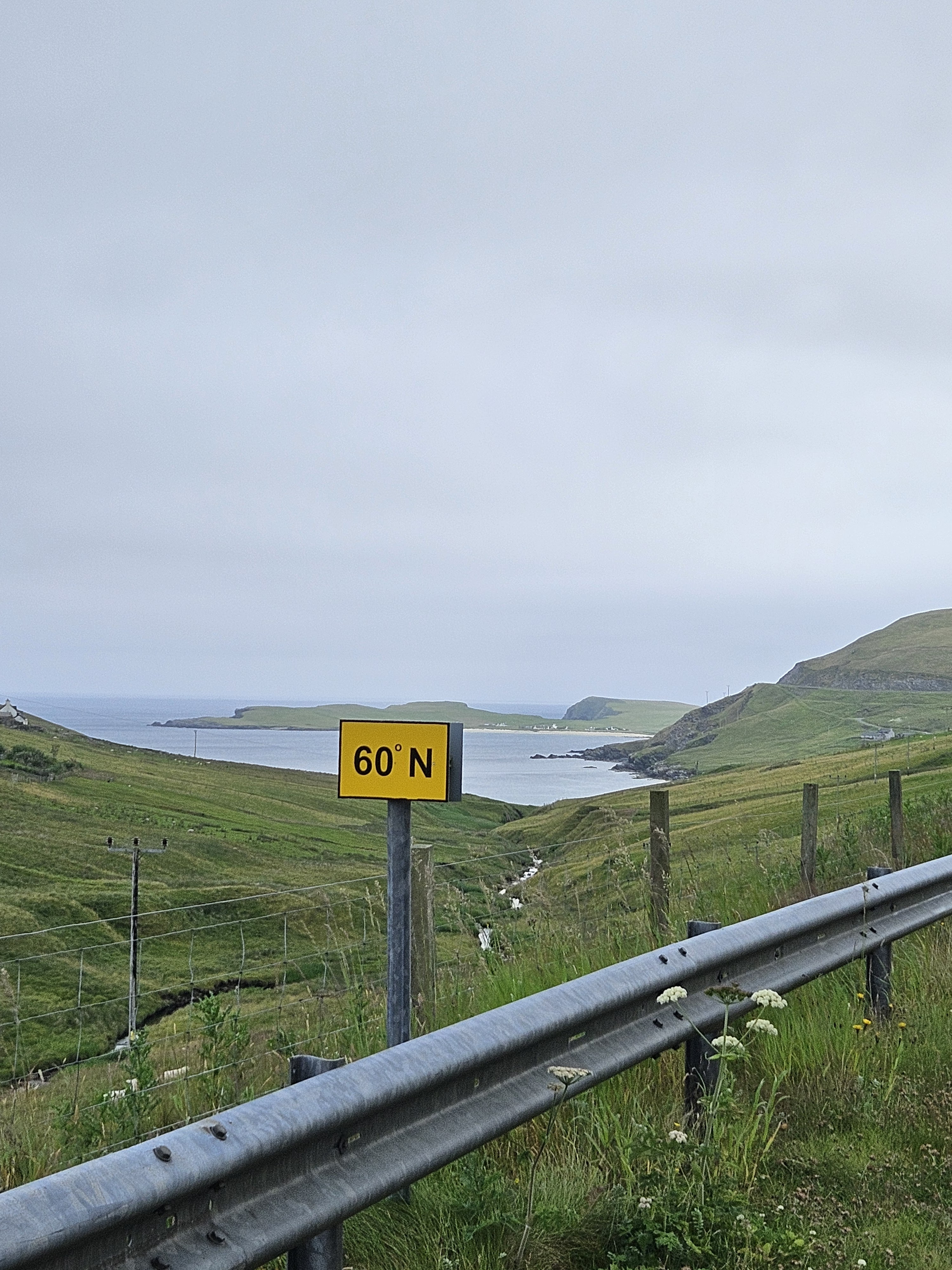
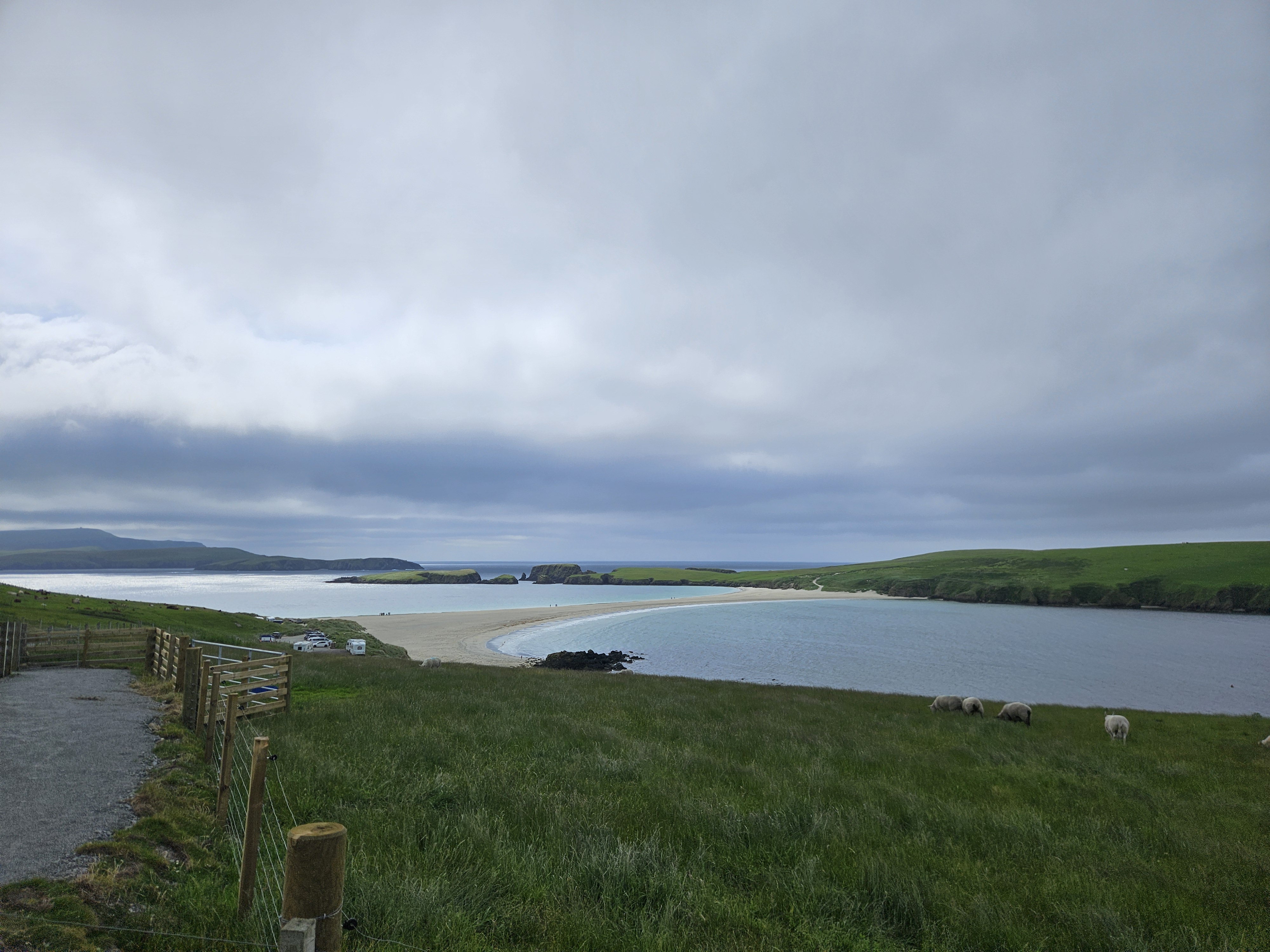
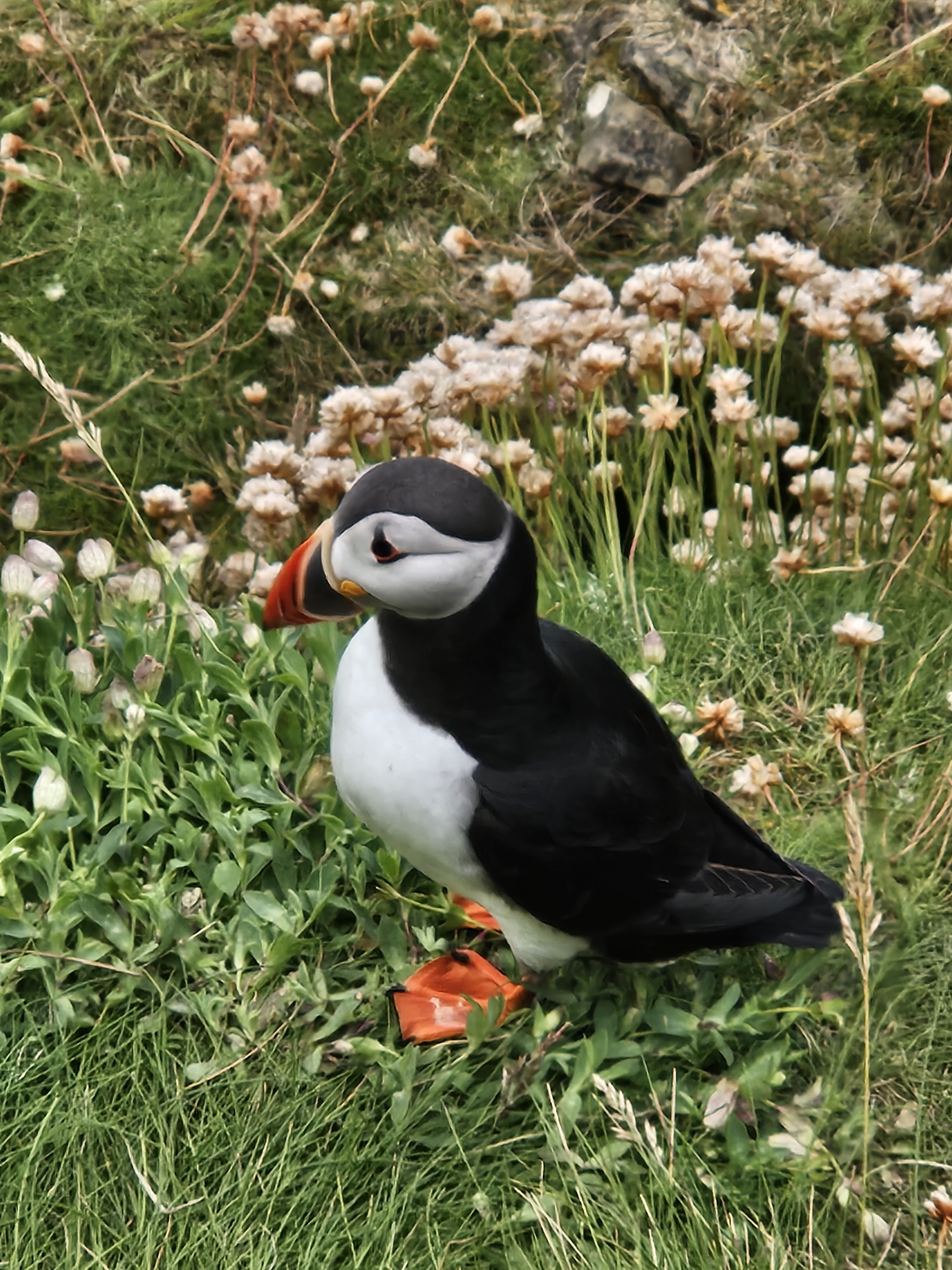
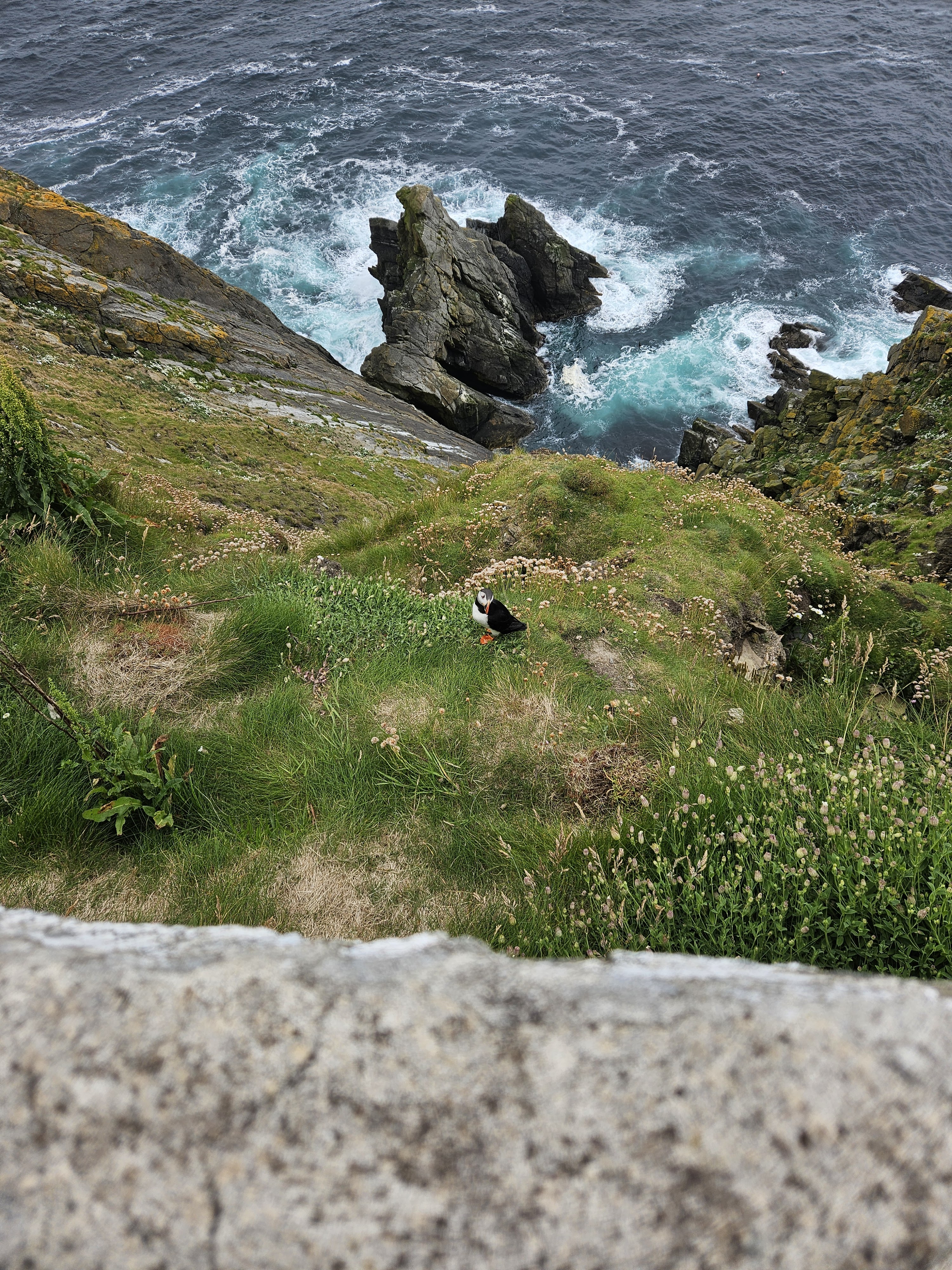
We passed the 60th parallel on our way to St Ninian’s Tombolo, a beautiful beach connecting the mainland to St Ninian’s Isle. Continuing south past Spiggie Loch, Bakkasetter and Quendale, we made the unusual crossing over the runway of Sumburgh airport, and to the southern tip of the Island- Sumburgh Head. Puffins were not on my checklist of things to see, yet they perched on the cliffs surrounding Sumburgh Head in their thousands. Tammie Norries, as they are called in Shetland, are playful and friendly birds, and a lovely sight to see.

Driving back towards Lerwick, we first encountered Boddam, where Ness United play their home games, and where Southend F.C. play their Parish Cup fixtures. As the name suggests, the Parish Cup is for teams representing a small area of Shetland, and who usually don’t compete in the leagues. Lerwick clubs are unable to compete, as they are often too superior a team to make it a fair competition. Southend F.C. will only meet a handful of times per year, to compete in the cup. Sandwick was next, another Parish Cup team, and lastly Cunningsburgh, a Parish Cup team and the occasional home to Ness United if Boddam is unplayable. That concluded my tour of football pitches in Shetland, where I managed to visit ten impressively well-kept grounds. Keith and I returned to the ferry terminal, where I once again boarded the M.V. Hrossey, concluding my time in the Shetland Isles.
Conclusion
In a month where the Euros seemed to create more division than unity, more hatred than joy, and more boring, predictable football than ever, I feel fortunate to have witnessed a true vision of the game, played and supported for the enjoyment of the community. The more I learnt about Lerwick Spurs and Shetland football, the more I became fascinated, gutted I couldn’t have caught a few more games. Beyond the football, Shetland is an entrancingly beautiful part of our world, with each corner turned producing another stunning view. Lastly, the incredibly hospitable and kind people of the Isles really made my trip, I will certainly be back.
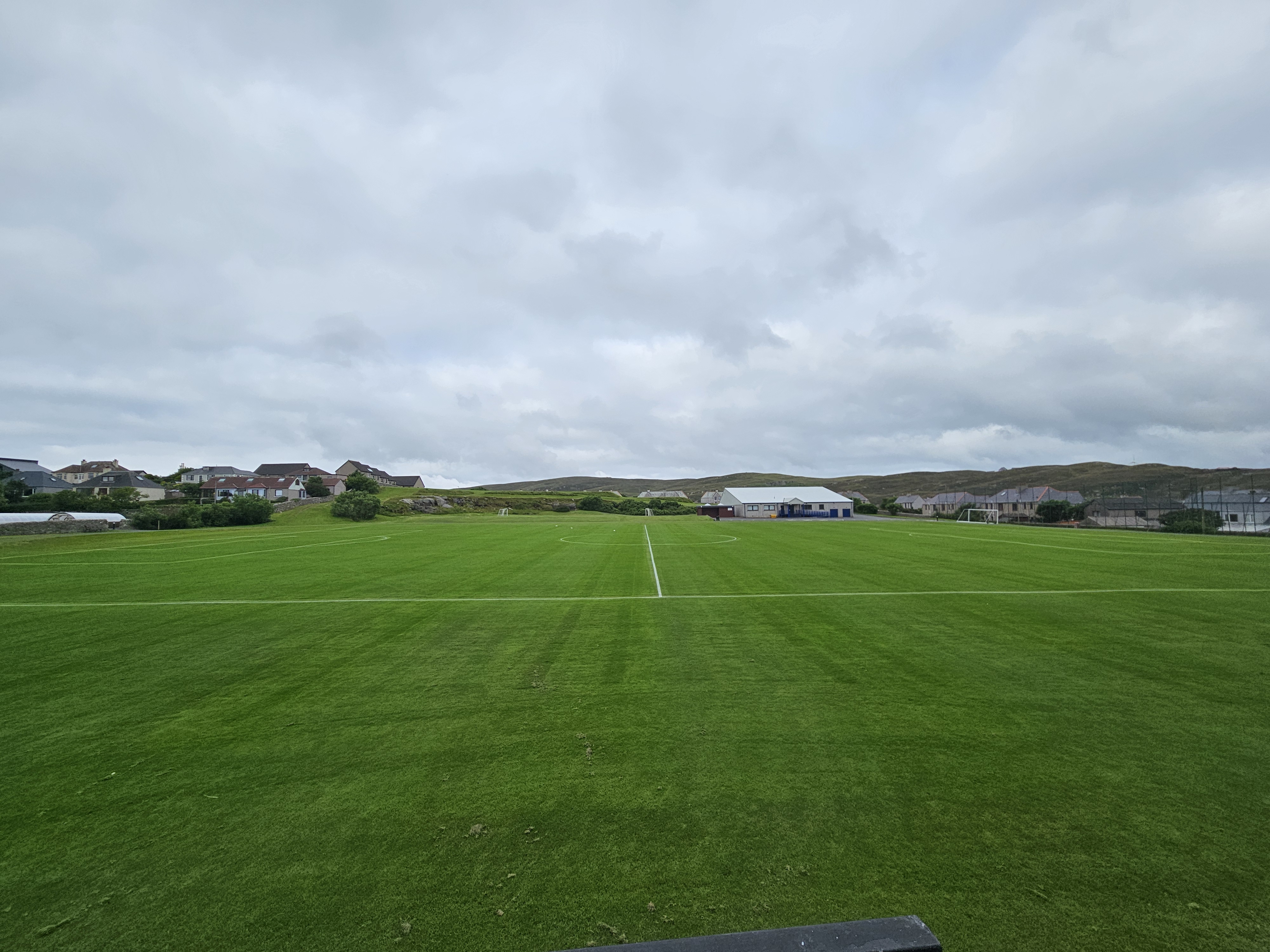
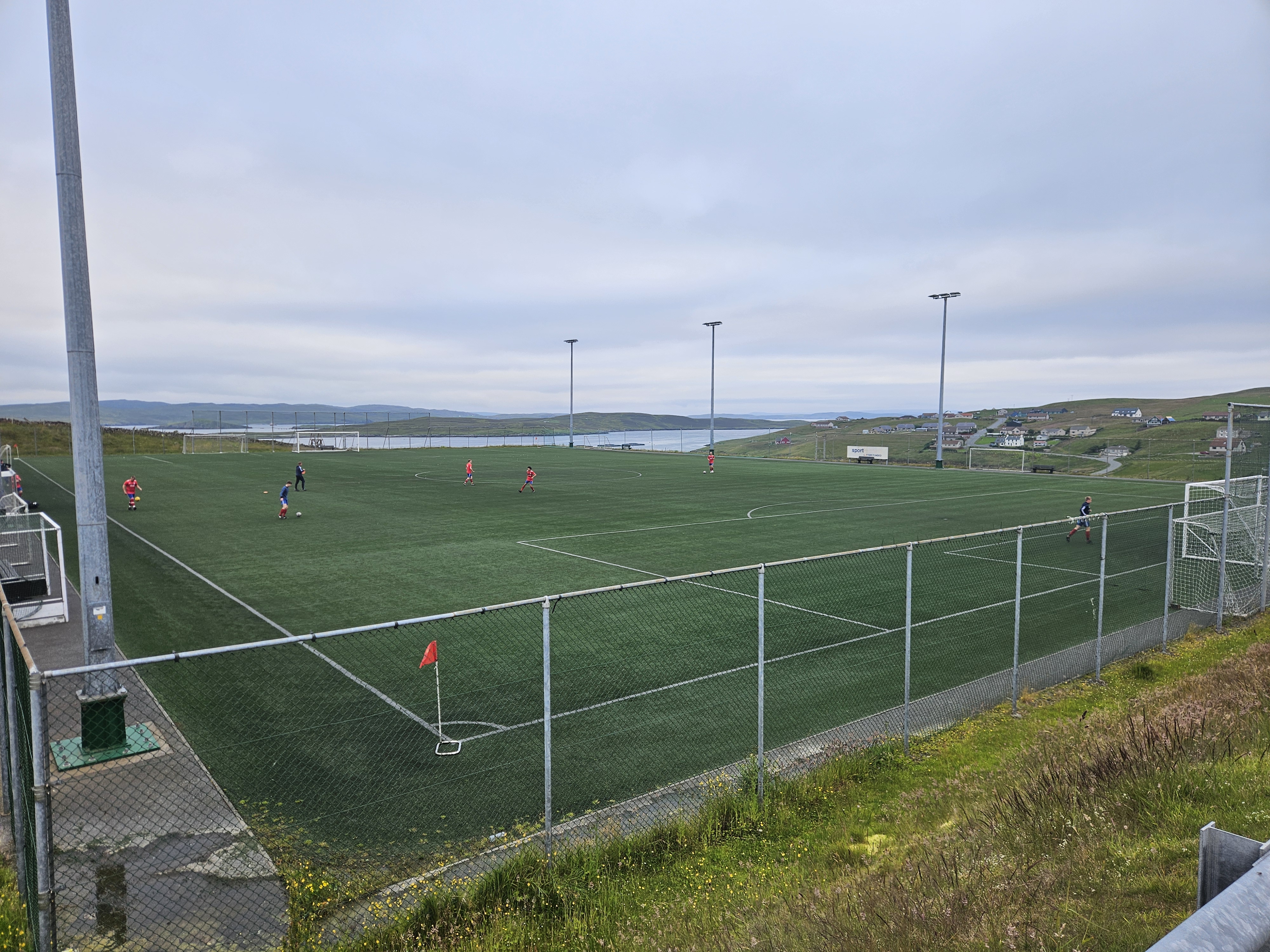
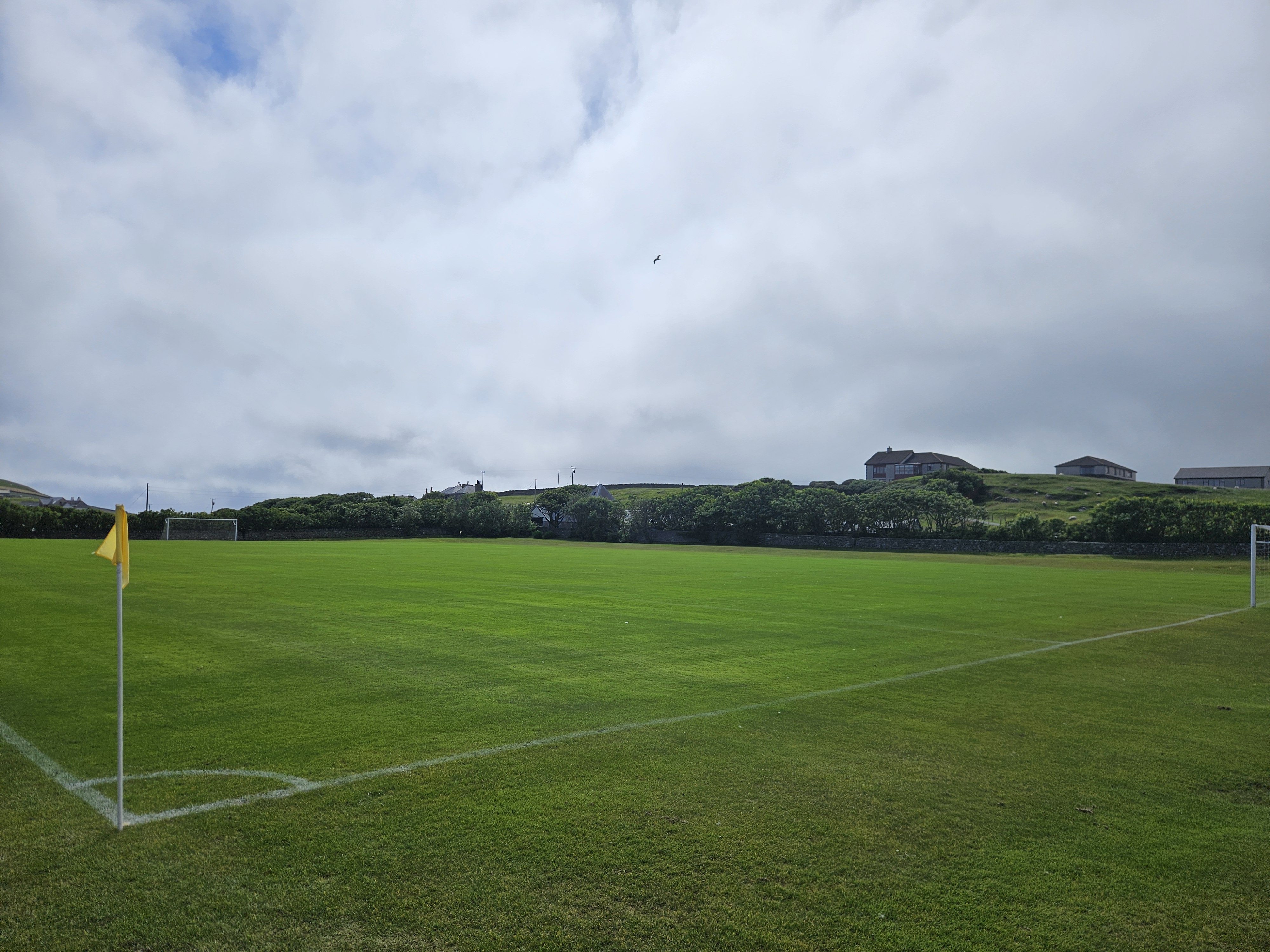

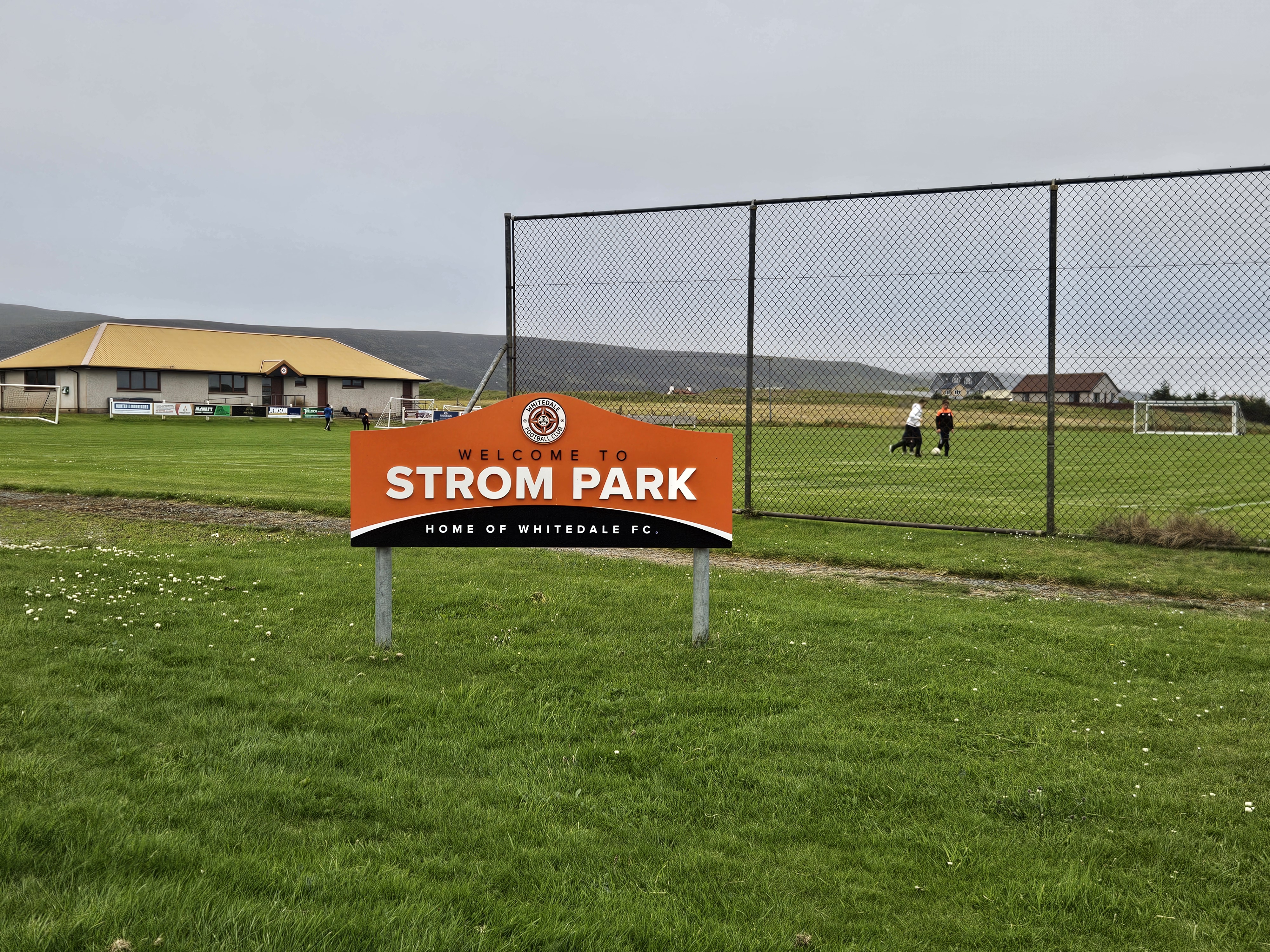


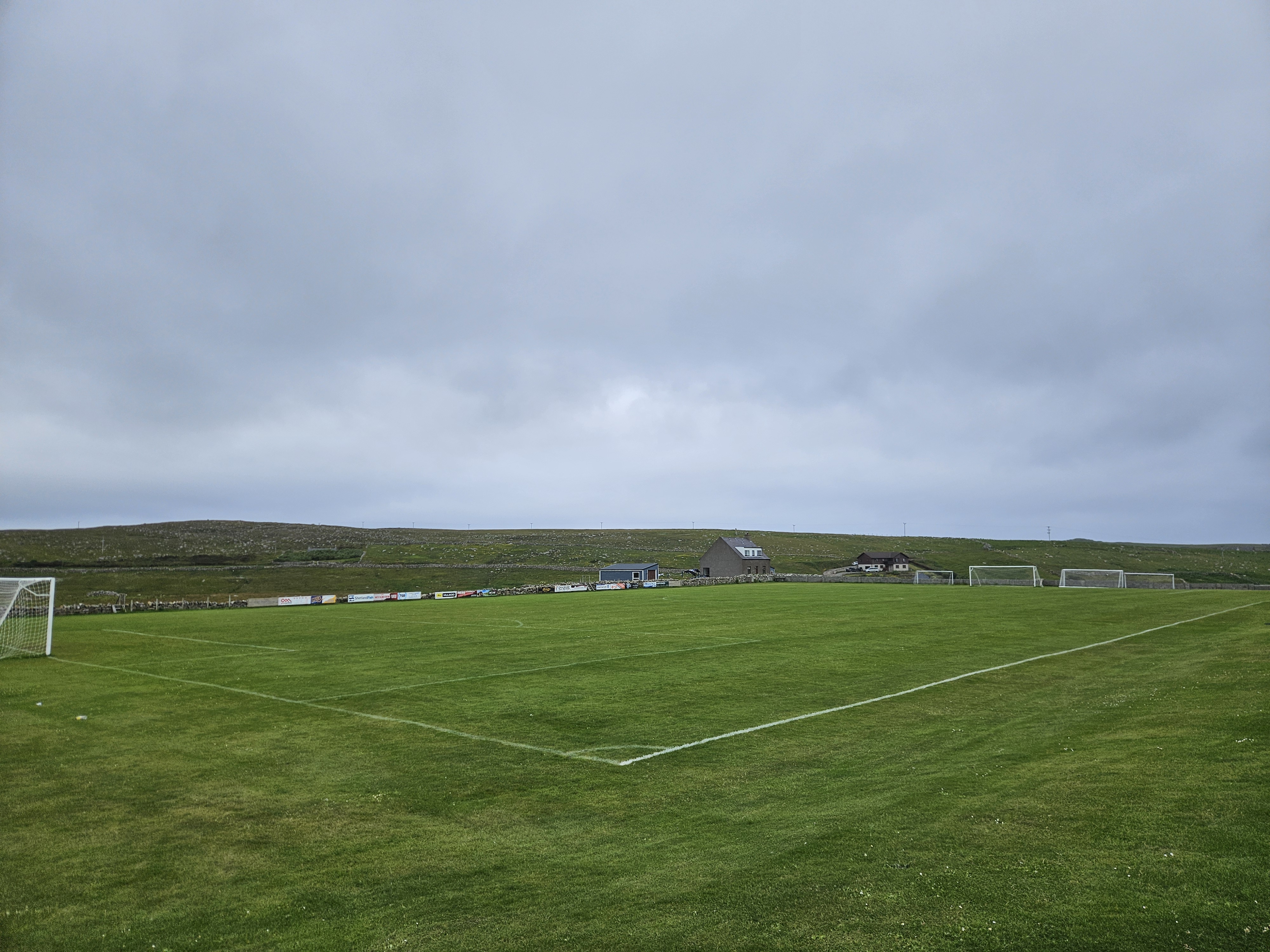
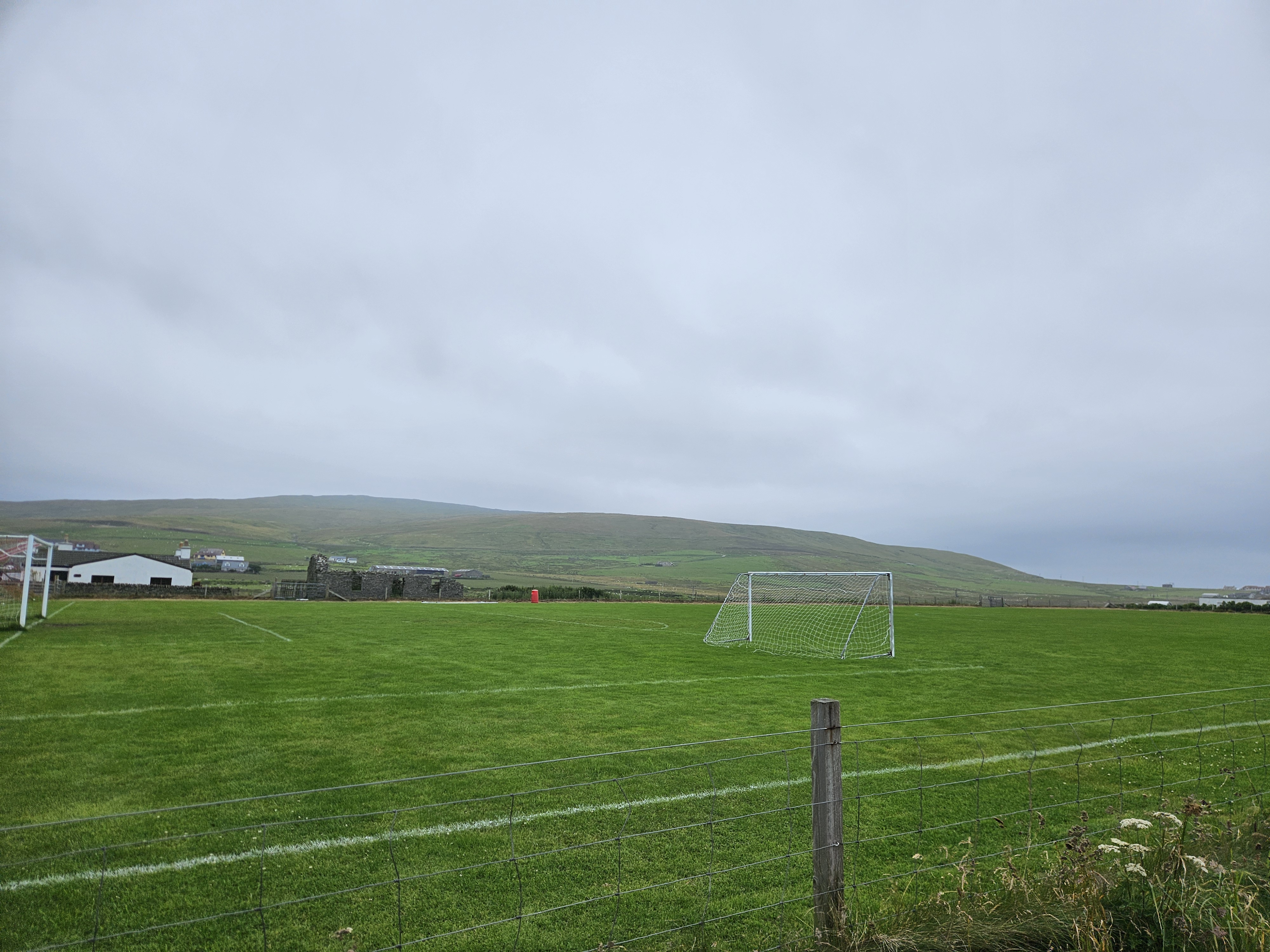
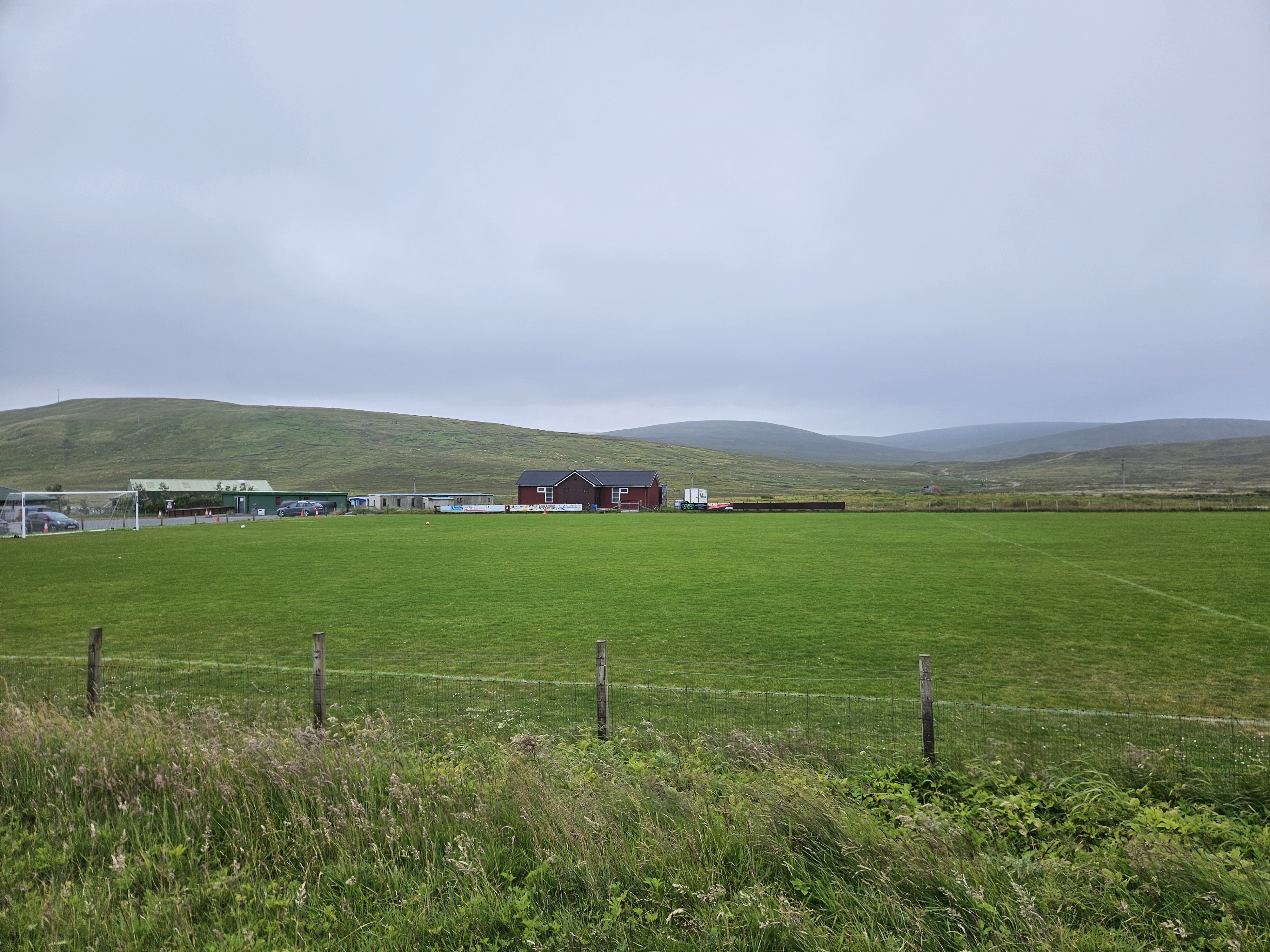
- Gilbertson Park
- Harbison Park
- Seafield
- Brae Park
- Strom Park
- Fraser Park
- Clickimin Playing Fields
- Boddam
- Sandwick
- Cunningsburgh
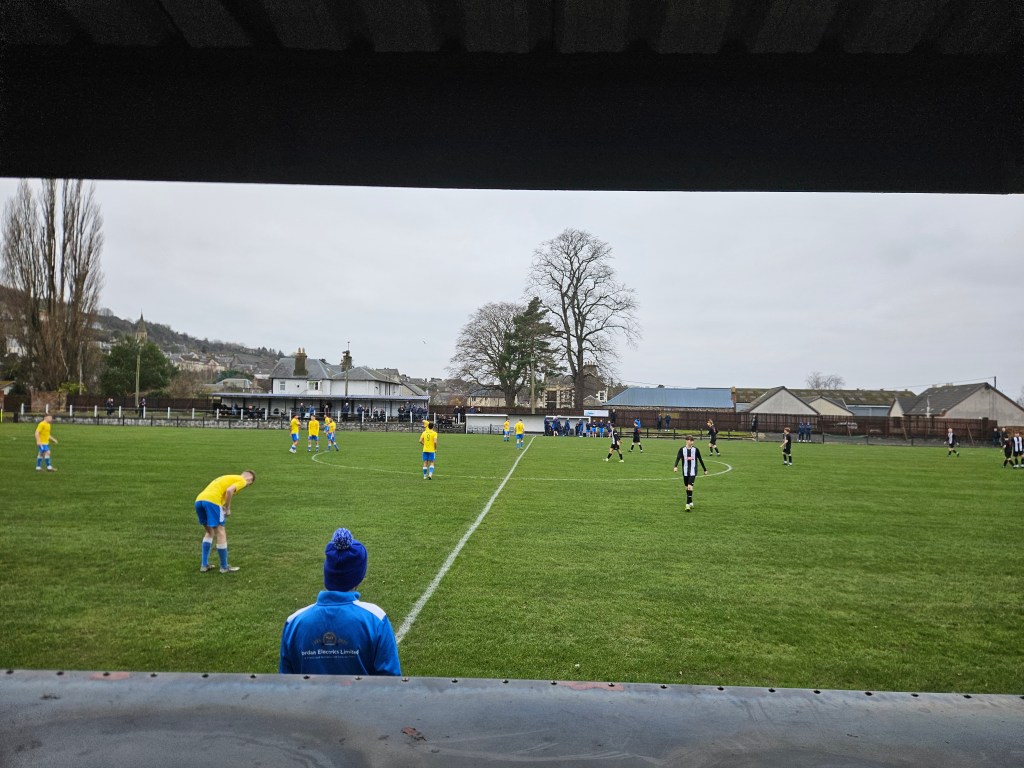
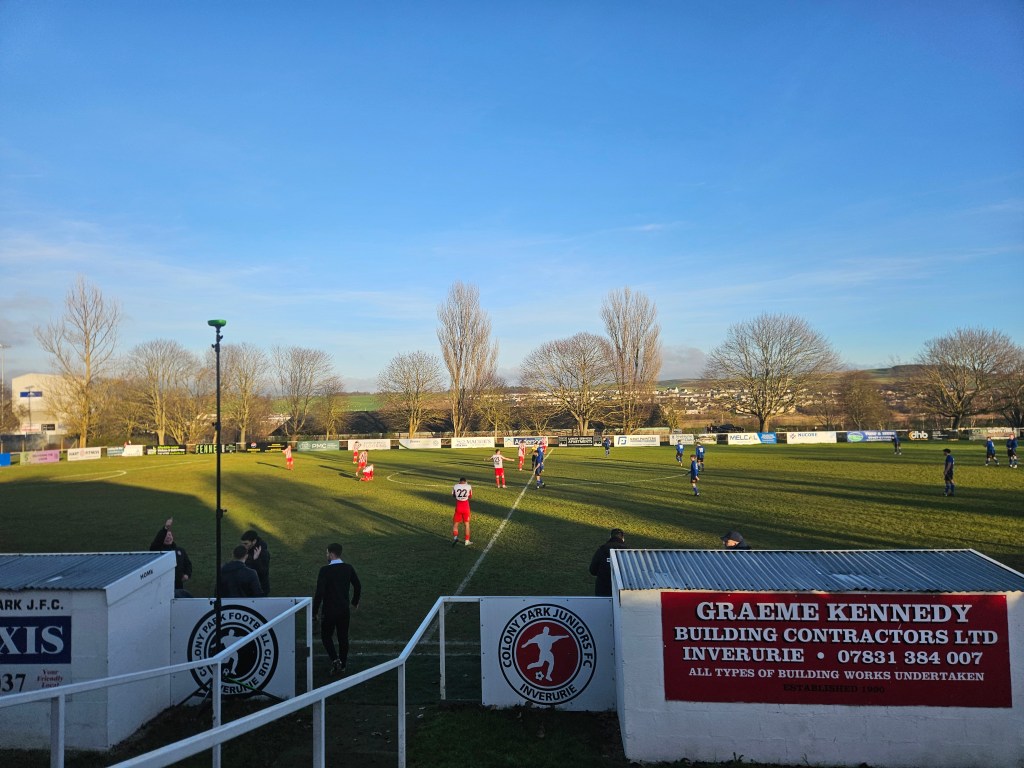

 Northern Terraces
Leave a comment